Transcript
Tom Marchant: 00:04
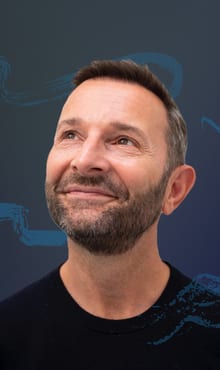
In the second part of our conversation with Anant Sharma, we step back from emotion and look at how he experiences the world. As someone who travels extensively for work, for family, and for curiosity, Anant approaches travel deliberately. He studies the details, the signals that build trust, the friction points that shape meaning. He believes luxury at its best should allow you to slow down rather than accelerate. Explore how he travels differently now than he did a decade ago. Why he protects his structure of time, why he bricks his phone when he’s on the move. Why a great guide can completely transform your understanding of a place. There are tangible takeaways here: how to avoid overshadowing your trips, how to build space for serendipity, how to notice the design cues that shape your experience, and how to see friction not as a flaw, but as part of the narrative. And how to do it with greater intention.
Tom Marchant: 01:00
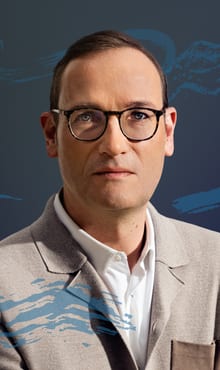
So I’m delighted to be joined on the pursuit of feeling today by Anant Sharma, a good friend, futurist, incredible thinker who shapes and influences some of the most iconic brands in the luxury world today. Anant’s spoken beautifully and poetically about boredom and its role and the application in our lives and how we see it play out in travel. And now I’m going to just dig a little deeper into Anant’s world and his travel life. Hearing from someone who travels so much, I think I travel a lot, but when I talk to Anant, I figure I don’t. So I can’t wait to hear what Anant’s got to share. Anant, thank you for being back on. Absolute pleasure, always. Good. Anant, as I said in the intro, you travel so much.
Tom Marchant: 01:48
How do you travel, if you do, differently today than, say, you were traveling 10 years ago?
Anant Sharma: 01:55
I think I was always racing to get places 10 years ago. And now I revel in the journey a lot more. And I think it comes with being a father and having a business and being a certain age and having a lot of demands on your time. But I actually really enjoy the journey now. I mean the really functional parts of the journey. I really enjoy — I brick my phone when I travel now. So I basically turn it into a dumb phone, everything’s banned. And it means I don’t fill all the moments in between with pointless news or interactions that don’t really matter. So I’m a lot more connected. I’m also a lot more diva, I hate to say it, but I just don’t have the health span left to travel in a way that is uncomfortable. I’m a bit more Rimowa and a bit less North Face.
Tom Marchant: 02:44
I like the honesty, and I think also — given that you travel so much — you’ve earned the right to be a bit more Rimowa, a bit less North Face. No offense to North Face, and yeah, thank you, Rimowa. But I was going to ask you, though I think you touched upon
Tom Marchant: 03:05
it already. I mean, it’s something that I try and do when I travel is build in sort of unfilled time into trips. I find that from going somewhere and every hour is accounted for — and often it is — I worry that I might not sort of get what I so often seek when I travel, which is moments to kind of connect with a place that doesn’t feel too prescribed, or that I just can wander with my thoughts and not be distracted. Do you? I mean, you talked about bricking your phone, but when you’re actually on a schedule into places, do you try and build unfilled time into your plans? Or is that hard?
Anant Sharma: 03:40
I’m quite schizophrenic about it, actually. I’ve become, as I’ve got older, a lot more protective of my time when I’m away — to allow for serendipity and to allow for flex. I’m really like, you know, I sort of get my claws out when something’s going in and really evaluate whether it’s worth it. I can sometimes be a bit lazy, actually, like when I travel and just fall into a bit of a sort of reverie, you know. Yeah. But I really appreciate those moments. When I’m on vacation, and when I’m not just traveling for business — the times in between is like a byproduct of something that’s quite important — there’s like maybe a lot of stress before something and then a bit of a lovely moment afterwards. Like, I’ve done the thing I’m here to do. When I travel and there’s a value attached to the travel, you know — limited family vacation, money — when I’ve made an investment, I can try and mainline activities. I’m a bit like, I want to complete the game. Yeah. And I’m always trying to find my own antidotes to that. So I can espouse certain virtues and how I believe one should travel. And I’m probably hypocritical to those, but I’m aware of them maybe to a greater extent because I’m quite indexed the wrong way. I can be a bit like, I want to do it all. Do you know what I mean? I want to see it all. I need to complete it all and tick it all off, and it’s not the right way to be.
Tom Marchant: 05:15
It’s interesting because I, yeah, there was a question I was going to ask of like, you know, what do people get wrong when they travel? And what else you can ask in that question is: well, ultimately, travel — I’m in the business of helping people get the most out of their travel experiences and creating experiences that are perfectly tailored for them and them alone, right? So you’re not following the crowd, you’re not doing something that’s packaged or formulaic. But by default, that just means there are so many different ways that people take to travel and what means something to them. I think I’m the same, in that depending on where I am or my reason for being there, I’ll have a very different outlook on what I want to do or how I want to approach that place. I mean, there are some places, and I won’t name them, where there is so little in my eyes that interests me — whether it be culture, because there’s a lack of culture, or depth, because of the lack of depth — that I actually relax if I’m by the pool of the hotel, because I’m not worried about the fact that I’m missing out on things because I don’t think there’s much there. Now that might be wrong, but normally it’s never a busman’s vacation for me because it’s my job to do it. And I’m just so curious that I want to be out doing it. And if I’m somewhere in a place where I don’t feel I’ve really kind of turned over most stones, you can kind of see me — or my wife and people who know me can see me — sort of fidgeting a bit because I’m like, well, what’s over there? But equally I know I can go to some places, I’ll still have a nice time, but I don’t have to worry about that itch not being scratched, because it’s not really itching, if you see what I mean. But it just depends on where you are, and I think I’m framing it.
Anant Sharma: 06:57
No, I think, to summarise your point — when you go on a vacation where the purpose is relaxation, it can be deeply unrelaxing because you’re trying too hard to relax. Whereas when you go somewhere that interests you less, the byproduct of the fact that you don’t feel there’s an expectation around your experience is, ironically, relaxation.
Tom Marchant: 07:16
Yeah, it is. I mean, relaxation comes in so many forms. It’s like relaxation sometimes is because you need to be distracted, you’re not thinking about home. But relaxation also, when you’re calmly distracted, is quite easy as well. Yeah, we’ve probably talked about that quite a lot.
Tom Marchant: 07:29
When you first arrive somewhere new in your travels, are there certain things that you’re looking out for that you notice — what things stick out in your mind or that always act as a marker?
Anant Sharma: 07:44
All the things that you think that shouldn’t be the things that stick out. So the flooring and the light switch and the ceiling, like in a funny kind of way, are markers of the spirit and design of a place, more so than the vista. I’m not saying I’ll become desensitised to a beautiful vista, but those things are important and I know that they will slowly become a part of the play of my research.
Tom Marchant: 08:12
Is it because those details — like the light switch — reflect something greater about a place that you’re interested in? And actually it’s in the detail that you can learn a lot about that place, or how they approach things.
Anant Sharma: 08:31
You’re trying to evaluate a subjective experience, right? And so you’re building a sort of trust or paradigm of design and value, and you know how people use materials and what it might say about the rest of the experience and how to judge like other parts of the experience. And your brain is frantically trying to figure these things out, whether you like it or not, because at the end of the day, you’re not just having an experience, you’ve paid for an experience. So you’re kind of in a product while also being in an experience, which is just a tension that you sort of have to call out — do you know what I mean? You’re paying for a thing that you’re doing, and so value is a really important part of it all. And so it’s the tiny signifiers that give reference to what that value actually is and how you can sort of associate it to other things in your life that become, do you know what I mean, the bedrock of who you believe you are creatively and as a personality.
Tom Marchant: 09:28
Yeah, I totally agree. And I think not just because we both work in the travel and luxury industry — because you have experience of seeing these things, they matter. I think it’s for anyone who takes care and attention or cares about things even in their day-to-day, that you can see so much through something seemingly insignificant. And like you say, it does matter when you know precious time, time away. I can tell a lot — and a lot of people can — by where the tap for a shower to turn it on is positioned, and miss small things like that. But I think it’s interesting how some of the things — and this is not taking views for granted, they’re important — an experience that feels properly immersive and deep has to kind of translate through to all the details. I mean, on a different level, beyond properties and stuff, I always notice — it’s weird — but it’s like the smells of airports, and they all just have different things. I think it’s probably that I’ve got a fine nose for different detergents they use to clean airports, but JFK, for instance, has a very distinctive smell, do you know what I mean? And there are different airports, and I think it’s also because senses, just for me, always seem much more heightened when I’m in new places. And maybe it’s because I’m not actively going, oh, I’m going to try and smell or hear differently. But I think when you are somewhere new — and you’ll know more of this than I do — your body is just a bit more attuned, like, okay, this is new, there are things coming at me, so it just feels like you’re reacting a bit quicker, or in a more heightened sense, than you would be at home where everything feels more natural, so you’re not really thinking about it.
Anant Sharma: 11:19
Yeah, I mean you’re in a slight state of fight or flight, and so all of your senses are more acute. Yeah, when you get off an airplane, the reason an airport smells a certain way — or whether you’re frankly just walking into the terminal — is because your scent is one of the only senses where, when a certain scent becomes a common denominator, your brain qualifies it out, so you stop smelling it. So you can’t really tell what your children smell like. I mean, you can smell your children, but you can’t really tell what the smell of your own home is. Your brain has basically qualified it out, like common sense. But obviously, when you’ve been blasted by air conditioning in an airplane — thank God you can’t smell anything — and so those senses are really heightened.
Tom Marchant: 12:07
Right, it’s true. And talking about friction in travel — when I say friction, it’s where sometimes it might feel challenging but rewarding. You have to earn the experience. When you’ve been traveling, have you experienced what I’d call a healthy friction in travel? I talk about this when there are certain parts of the world where it might not be super sleek, it’s rough around the edges, but it’s okay because it’s part of the bigger experience and you shouldn’t have these expectations — and that’s part of what makes it interesting. Is that something you see, or means anything to you?
Anant Sharma: 12:51
I say this often because I really believe it, but I think luxury should be an excuse to take the slower path. And when you pay for something — to go back to this premise of value — you are really paying for your own time. You’re paying for yourself to value something more, you’re valuing that time more than you would otherwise. People don’t value their own time, actually, in a lot of what they do. Things we spend our time doing and waste our time doing. So when you spend money on something, especially for the high net worth, you’re buying that space within yourself, within your calendar — for yourself, for those around you — to learn something, to educate yourself, to reconnect with your senses, to connect with those around you. And you’re buying the right to take the slower path. And a lot of the joy in life is the journey to get to the outcome. Today the world has just become about the headline, isn’t it? It’s the punchline without the journey.
Tom Marchant: 13:59
Yeah, yeah.
Anant Sharma: 14:01
But the hero’s journey — it’s a famous narrative arc — without tension, there is no triumph. So you realize when you get to the end that it’s been about the journey, it’s not been about the place you’re trying to get to. And so I think luxury plays a noble role today, which is how can we, across every touchpoint, slow the cadence, creating positive affirmation, positive reflection, getting people to stop and see what they might otherwise not. English Heritage have these signs that they experimented with in some of their estates — instead of saying don’t walk on the grass, they say take off your shoes and stand barefoot on where history happened. And it’s just a reframe, isn’t it? But it’s one where people can have a far better time of what they’re there to do, which is not just consume the environment but connect with the environment.
Tom Marchant: 15:16
Yeah, it’s funny actually. You talk about the role of good guides in some of the journeys you take, or whether some people say, well, I don’t need a guide if I’m going to be trekking through — say, up in Leh, in northern India — and we do a lot of business up there. There are the village walks and it’s amazing to be guided, and you can do it without guides. But I’m speaking from personal experience. There was one day I was there many, many years ago, and I said I’d just hike myself from this point to this point, and the imagery is great, but I just didn’t have any of the context of the places I was walking through. And a guidebook doesn’t have that either. But when you had someone beside you who could bring that place to life and make you think about it more and connect more, it made a difference. And whether that’s through someone or through the language of signs, I just think it slows you down and you take more from it. I mean, the relationships that people have built — our clients with guides around the world — it feels like they’ve become extended family members, actually. But I think that’s because of the stories they tell and the connections they foster.
Anant Sharma: 16:31
A good guide dramatically alters everything about your experience. Yeah. Everything. You know, you can sometimes fall into this fallacy that a guide tells you what’s around you, and of course, a guide doesn’t do that. A guide is a part of the lineage of like all of the historical points of reference that led up to why everything is the way it is now.
Tom Marchant: 16:53
Exactly. Exactly. There’s a guy who’s a very good friend of mine in Iceland called Jon, and he’s about seven foot tall, he’s like a big red-haired Viking. He knows my daughters, knows my family, and I know him very well. And the way he shares stories about his family and the folklore in Iceland — Iceland doesn’t feel like Iceland if you’re not with someone like Jon. And yeah, it means a lot. And I think they’re a key facet. So yeah, here’s to the guides.
Tom Marchant: 17:28
talking about that, which I think kind of leans into a question I was going to ask you, and I think we could talk for hours on this. I think we’ve been at recent dinners where we’ve probably had this conversation, but as a snapshot — we as a company are embracing many of the benefits that AI can bring into our systems behind the scenes, to kind of get rid of some of the customer friction in terms of getting the right engagement with our brilliant human beings. So we see it as a tool to help our human beings amplify their uniquely irreplaceable human skills. And it’s a big question — we see it as a role to support us in delivering uniquely human-led experiences. Where do you think AI can meaningfully play a role in experiences, and where should it stay out?
Anant Sharma: 18:18
I think you just need to ask yourself a simple question, which is what business are you in? And that governs style of service, role of technology, AI enablement, level of personalisation, level of surprise, like depersonalisation. If you class the Dorchester and Aman as luxury hotels, but one has invisible service and the other has white glove service — it’s not the same form of service. Yeah. Go to CitizenM and technology plays an important role. They’ve borrowed kiosks from the airline industry to allow you to check in on your own without having to speak to a human, and that’s part of the promise. You can pick — well, obviously now being bought by a fairly large group, a lot of their technology’s been subsumed into a bigger technology stack, and that has well-publicised problems. But I think you need to ask yourself really basic questions first, which is what’s the emotional hypothesis we’re trying to deliver? And then firstly, how can AI create a better employee experience? And secondly, is there a role for AI in personalising the customer experience without a human checking, guiding, or tweaking the decisions — tiny decisions that ultimately seem very, very small when they’re part of an SOP or a PDF or a spreadsheet, but are still two really important minutes of someone’s day.
Tom Marchant: 19:46
Yeah, and that’s the thing — it’s the element of trust and it’s the element of insight. And I think the big thing in the luxury travel world is relationships. And I think where we and great hotels work well is the relationship between humans, relations within their spaces and around. I think that’s very irreplaceable. I think, like you said, helping the employee experience is great. And I think where there are mundane areas or friction to be smoothed out, it’s great. But I think also, like you said, asking what business you’re in.
Anant Sharma: 20:24
I think what you’ve built with the feelings engine — I think that’s a really interesting use case for AI. And I wrote a business plan to build just this 10 years ago, and it was initially for the fragrance industry. And I was interested in the fact that people couldn’t understand their scent, and the only way in which a perfume was marketed was sort of based on what people thought they liked the smell of — but actually after you smell two things, your nose is basically overwhelmed anyway. And then, whatever celebrity had endorsed that fragrance. And so I went deep into different note types, and there were sort of different facets of note type. And then I applied analogous reference imagery — so what other visual references can you move people through to then create a curated selection of fragrances? And I tried to sell it to the world of duty free at the time, and there’s a problem with licensing. Apparently, the two main noses in this world — which is the name for those people who taxonomise and classify all the different types of fragrance — you have to pay huge license fees to use any of that data. It’s quite an interesting journey, actually. But I then rebuilt it for travel, and my premise was simple, which is that you don’t know if a 22-year-old newlywed couple want an empty beach or a packed one, and you don’t know if a 60-year-old couple want an empty beach or a packed one. You just don’t. I mean, to put it very basically, a persona means nothing. Yeah. You don’t know what people are after. And if you can get people through a visual mood-boarding tool — effectively replacing forms and filters with visuals — people have more fun making choices. The second part that interests me is actually group travel and how you involve others in making choices with the key decision maker. Now, normally the key decision maker is overwhelmed, having to take responsibility for more people than they’d like, because no one’s actually had agency over the choice. No one appreciates the level of decision-making that’s had to go into the thing that you ultimately engage in, and perhaps don’t appreciate it as much as they would if they’d been involved in the process as well. The third part is how do you gamify it so you turn it into something that actually feels enjoyable, rather than an overwhelming decision that leads to choice paralysis. And so I think there are interesting things to play with. I think AI can help in those areas, actually.
Tom Marchant: 22:57
Yeah. Yes, it can. And we should talk about that further.
Tom Marchant: 23:03
For someone who’s traveled so much, yeah, you could probably reference a whole host of destinations that had a profound impact on you.
Anant Sharma: 23:10
But if I were to ask you one destination that’s had the biggest impact on you, where would you talk about and why? Look, I’m Indian and I’ve got an uneasy relationship with India because it’s a country that I love deeply, but I also watch it eating itself, which I think is quite unhealthy. And I won’t go too much into that, but I really reconnected with India when I went motorbiking through it. And I didn’t travel through India. A lot of people, when they were in their teens or when they went traveling, they went through like an Indian backpacking route. But I never did, because whenever I went there, I was always visiting family. So my time in India was too precious to travel. And maybe I’d go and do a week in Goa, get some psychedelic trance, party for three and a half days. But really I didn’t have the time to travel. And so I struggled to look above the impracticality and poverty, and that impacted me hugely because it was just such different worlds — and I knew I came from one, but I lived in another. And I could see the pain in one, and I could see problems, different sorts of problems, in the other. And I went back to India every year my whole life, enough to see the change, but not enough to be desensitised to the change. So it’s like I went motorbiking through the mountains, and we spoke about flow state earlier. I just couldn’t believe how switched off my brain was — worryingly switched off when I was on a motorbike — but also how kind of central the whole experience was, and how when I went deep into the mountain ranges, over the first mountain, over the second, over the third, into life in the mountains, within the range, how suddenly connected with this sort of historical way of Indian being I was. And the level of peace that was there was, for me, quietly breathtaking. So it would have to be India.
Tom Marchant: 25:30
Beautifully
Tom Marchant: 25:31
put. Quick, before we wrap this up, I always want to ask. Again, it’s always a tricky one for a world traveler, but I want to ask for quick answers on a few things. It might be difficult given your role of advising, but do you have a favorite hotel?
Anant Sharma: 25:48
The last one I went to. I went to Islas Secas in Panama, and it’s just amazing. I really — it was wild.
Tom Marchant: 26:02
Panama — I don’t know if the first ever research trip I took when I started this company was to Panama, about 20 years ago. Largely because I think it was the only place that was willing to host me because I didn’t know what my company was doing. But I ended up having the best time out there kayaking up the Panama Canal. Do you have a favorite view?
Anant Sharma: 26:22
Yeah, it’s a bit underwhelming. It’s stupid in a way. It’s the willow trees out of the window of my study in Islington where I am now.
Tom Marchant: 26:29
Really? I mean, but how envious a position to be in that you have your favorite view outside of your house. So that’s perfect. And lastly, just because food’s a big thing we talk about — restaurants, the epicentres of sensory experiences. Do you have a current favorite restaurant if you were going to recommend?
Anant Sharma: 26:48
It’s always the last good one I went to, which in this case it’s Manao in Dubai. Just to mix it up and throw something in a different place. And I enjoyed it for various reasons, but I wasn’t drinking when I turned up — I realized it was also a restaurant that didn’t serve alcohol — and they just had an amazing set non-alcoholic pairing menu. It was just extraordinary and felt like such a treat to be in a drinking abstinence phase. To be at what I think is a Michelin-starred restaurant, and just to have an exceptional pairing for every course. And it was over.
Tom Marchant: 27:30
That’s for us at the top level, isn’t it? Rather than a jug of tap water and a diet coke. Exactly. Might make nice pairings. Anant, thank you so much. That is as informed and inspiring as ever. So deeply appreciate you giving your time for this episode of Pursuit of Feeling, where we talk about how you explore the world, and I know listeners will get a lot from it, as I have. So thank you very much for your time and coming on the podcast.
Anant Sharma: 27:59
Always an absolute pleasure. Thanks, Tom.
Tom Marchant: 28:02
Cheers.