Transcript
Tom Marchant: 00:04
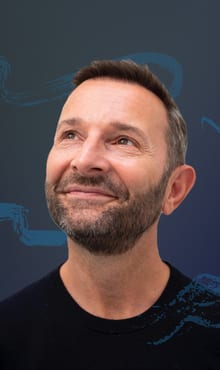
Welcome to the Pursuit of Feeling, a podcast from Black Tomato. Each month we sit down with one exceptional guest for two in-depth conversations. The first explores a single emotion: what it means, how it shapes us, and how travel can intensify or reframe it. The second looks at how that guest experiences the world, how they notice, interpret, design, and move through places with intention. Each conversation is released as its own episode. We choose founders, cultural leaders, and creative thinkers whose work shapes experience and perspective. What unites them is how they see the world and what that way of seeing can reveal. At Black Tomato, we design journeys around how you want to feel. This podcast is where we explore why that matters. Find out more at BlackTomato.com. In this month’s Pursuit of Feeling, I’m joined by Anant Sharmer, futurist, strategist, and founder of Matter of Form, a consultancy working at the intersection of psychology, design, and modern luxury. Anant advisors some of the world’s most influential brands on experience and human behavior. He’s someone who thinks deeply about attention, presence, and how environments shape the way we feel. In our first conversation, we explore one emotion: boredom. It’s not an obvious choice. Boredom has become something we instinctively try to eliminate: productivity, stimulation, constant connectivity. But what if boredom isn’t emptiness? What if it’s simply a lack of meaning and something we can consciously reframe? We explore why boredom can be formative, where stillness initially feels uncomfortable, and how travel, particularly the overlooked moments in between, can create space for imagination, clarity, and embodiment. You’ll hear practical takeaways too. How to stop filling every gap with noise when you travel, how to protect transitional time, and how to move from living in your head to reconnecting with your senses. This is a conversation about stillness and why it might be just one of the most powerful emotions we’ve overlooked. Anant, welcome to the Pursuit of Feeling. Honor to have you on the show today. Thanks so much for joining us.
Anant Sharma: 02:07
Honoured to be here. Great to see you, isn’t it?
Tom Marchant: 02:10
Yeah, I know. Great to catch up. So you know, what we what we do on the Pursuit of Feeling is really like to dig into the connection between travel and emotions and recognise the role that travel can play in producing emotions, but also the the quest for people looking to feel emotions through travel and and how they often align beautifully. And what we’re doing with this podcast with each honoured guest that we have on is focusing on a particular emotion and what that means to you and how that might have shaped your travel or or or influenced how you felt on your travel. And as someone who is such a fantastic speaker and thinker of all things emotional, I’ve been I’ve been I’ve had the privilege of hearing you speak many times in this space. I wanted to talk to you about uh an emotion that perhaps isn’t the most obvious one that people think about when it comes to travel, but one that I think is deeply profound and has a whole host of areas to discuss around it, and that is boredom. Um, not something you’d normally sort of jump back to discuss about travel, but I think it’s it’s very important. Lots of different definitions of what boredom is these days. Uh, Black Tobata, we’ve often talked about the need to be bored, um, because that’s where we think good things can happen, but we can get into that. So take us to a specific trip where boredom played a meaningful role for you and where were you.
Anant Sharma: 03:37
Well well, when I was fairly young, my parents, um, I think in actually a bid to salvage their marriage, which wasn’t going very well at the time, they got a motor home and they drove to every state in America. And it was an incredible trip. And I still have almost flashbacks of different emotions that I reference back to like sort of places that I can’t quite place, and images or smells or sounds that I I’m not quite sure where they come from, but they’re just really powerful because they’re not about words, they’re just they just take me back to like this like melting pot of experience from at quite a young age, formative age when my personality is forming. And so, but there was also a lot of boredom on that trip, you know. They were so asking my my father, you know, how long do we get to the next place? Because what were we really doing? We were just driving to that. We’re just driving to every state, you know, it wasn’t like there was no end goal particular. And we plotted some sort of hare-brained route through America, and he’d answer me back in miles and he’d just say, you know, it’s like another 300 miles, or is it kilometres, sorry, miles, then I’d just be like, How many hours is that? Do you know what I mean? He’d sort of hedge around the question a bit. And and I’d just sit there, and I’d sit there and being a little autocrat, I’d sort of dictating a diary to my mother, who’d become my scribe by that point. But we’d we I’d sort of sit there and and I’d start drawing, and I was I was fascinated by like the scale of America. And I’d be there drawing hotels and and just drawing hotel rooms and then just like getting my dad to count them, you know, I’ve drawn like sort of 300 small square rooms, you know, in in in a rectangle, you know, so 300 rectangles in a rectangle. And I found this meditative thing in just sort of like drawing these enormous hotels is is that’s completely bizarre, but but sort of really stayed with me.
Tom Marchant: 05:41
Yeah. But again, it’s the imagination port we talked about earlier, and and why, you know, I know as far as we both talk about it, but allowing for those things or encouraging that I think is so important.
Anant Sharma: 05:55
Um Do you know what, Tom, what’s funny about those hotels, actually, when I think back to the news, I don’t even know if that was about the imagination. I think that was more about the weird like input that we’re talking about with craft, you know, which is it’s like actually it was just about just repeatedly doing something and actually taking quite a lot of pleasure and finding flow state in it. It didn’t really matter what the outcome was.
Tom Marchant: 06:16
No, you’re right. Actually, I’ve I definitely stand correct to say some people say, yeah, well, it can be imagination, but also it prompts focus and craft through it. Um, I remember when I was very young, I can’t remember the reason why. And I’d like to think it’s because I was in trouble because that did happen, but I don’t think it was. Basically, I ended up like for about two weeks after school when I was like eight, writing out the chapters of a book that I was reading. It’s something my father’s doing it. Anyway, probably because I was left-handed and my hand right wasn’t good. I can’t remember what it was. But the satisfaction I took from doing this, I mean, like, you know, you’d think it would be um mind-numbing, but by the end of it, it was just reams and reams of this book that I liked, I’d just written out. But it became this process I really just got connected to and wanted to finish and just kept going. I loved it, you know. And I don’t know, I mean, it’s probably why things like Duolingo are so successful for people because they just, you know, want to keep going with things.
Anant Sharma: 07:15
It’s funny. Um I I I had ADHD as a child, and um, well, I still have it. Um, didn’t have a name when it was younger as you did. Um, and I got sent out of a lot of classrooms, and I got expelled from a number of schools, you know, and I look back on it, and I think a lot of a lot of reasons were came down to restlessness, and I get bored quite quickly. And um because I got sent out of so many classes, you know, I mean you’re just pacing the corridor outside the class, even less stimulus than you had before. I I started this ridiculous endeavor to count to infinity. I was I was quite interested in the concept of infinity, you know. Yeah, and and I just record where I got to. I mean, I got into the millions, do you know what I mean? Because I because I I’d just be walking up and down a corridor counting, you know, and I was sort of quite interested in just how far I could get.
Tom Marchant: 08:09
I mean, isn’t that weird it’s yeah, but it makes sense in terms of how how successful you’ve been. I love this. Can you think of trips you’ve taken where boredoms played a meaningful role?
Anant Sharma: 08:23
100%. I mean, just to start with, just make a quick point on on those
Anant Sharma: 08:28
moments in between as they were. Yeah, I I use this thing called the brick. Uh it’s quite popular at the moment, but it’s like a physical brick that’s like magnetic, it goes in your fridge or what you tap your phone on it and it bans anything you choose to ban. And you could the only way you can unban it is is is by like tapping your phone on. It’s like an NFC brick. And and it turns it essentially into a dumb phone. And and I and I I my two and a half year old hid it somewhere, and I had to go on a trip, and uh my phone was bricked. And now I keep it bricked when I travel because I realize, especially for business travel or more functional travel, how many of the moments in between I was just filling up with with you know useless news consumption, with snack messages that didn’t need to be answered by emails that were frankly lackadaisically written, um, could have been easily all done in one go or batched. And I was just missing out on actually just the beauty of the journey, which is actually quite a precious thing when you’re busy and when you run a business and when you’re raising a family, those moments alone are key moments for reflection. And it’s also a wonderful thing to just observe other people and to observe life in transit, you know. I mean, it’s giving you back great joy in the monthly aspects of travelling.
Tom Marchant: 09:53
I totally agree. I think it’s it’s sometimes almost like repurposing how you look at certain aspects of a of a of a trip. You know, I think we we have almost been engineered to think of like, oh, the journey part is going to be boring, it’s but it’s about getting to the place and people forgetting that the journey is often you know part of the whole experience. And actually, you can reframe parts of it. You know, I I see this as long flights now, you know, I don’t try and jump onto the to the Wi-Fi. Um, you know, I because I
Tom Marchant: 10:18
recognise that suddenly I’m getting something that’s precious, which feels like time alone without distraction and with a thought. And it doesn’t mean just this, I’m sat there raw dogging, looking at the screen, but actually time to sit and think or or write or or even read, which allow me to think a bit more. But but it’s it’s distractions that I’m choosing to have rather than letting things come at me. And I think what that does, certainly for me, uh I think certainly we see for clients or people I talk to, like yourself. Um it sort of speaks to this word about making you feel a bit more present in that place. And and so, like you say, people watching or thinking about where you are or taking stock that you’re in a plane 35,000 feet above the ocean and you’re heading somewhere far and wonderful, and isn’t that a magical feeling to have? And and you start recognizing more the significance of what you’re doing rather than taking for granted. I think on the bricks side, I remember being in Namibia many years ago, not long after we started the business, and I was at the skeleton coast, and yeah, you’re starting a business, you want to be connected to everything. And we we flew from Vindruck up there, got off a life aircraft, and there was no signal. And so I had this massive panic thinking, well, what am I gonna do? What’s gonna be happening back at home? Um, but you know, within a few hours, I just accepted you know that that is that was the case. I didn’t have signal, I just and what it did was you know, not deliberately, but it forced me into really being present and really just focusing naturally on where I was and what I was doing. And it gave me one of the most memorable experiences I’ve ever had because there were no distractions from outside of that world that I was in. And and you know, what do you know? I’ve got on a plane out of there and I ended up in Cape Town, turned my phone on, and you know, the world was still turning, you know, things hadn’t, you know, the the catastrophic catastrophization of what I thought was gonna happen hadn’t materialized. But what it had done had given me this incredibly present experience that um I wouldn’t have had if I had been connected. So what I initially thought was, well, I’m disconnected. Am I gonna be bored when I take this trip or at night? Um was completely opposite.
Anant Sharma: 12:24
Yeah, I mean, I think I think all of these things take us away from ourselves and and how subject we are to our environment and how our environment makes us feel, you know, not to state something you know entirely obvious. Um I think the prevalence of Wi-Fi on planes is a shame because it’s become an expectation and it used to be a sanctuary. And it’s quite a moving thing, it’s a fundamentally moving thing travelling across the world. I mean, not only is it like a uh one of the great sort of feats of magnificence of technology that we can like get into an aircraft and fly across the world in the air. I mean, you know, it’s it’s white, you know, and um, but it’s also um I just I just always find myself quite moved and like just sort of just a bit sort of like emotionally opened up
Anant Sharma: 13:16
by the by by travel, you know, across time zones from one continent to another. And you know, you can get so blunted to it all when you’re just in the same inbox and you’re just looking at the same screen and you’re just your hurt and that becomes your home, you know, your your home screen becomes your you know, metaphor, you know, your your your home physically almost. And and I think you you’ve got to separate yourself from that at times. And you know, I this is a bit of a sidetrack, but I’ve got this big thing about the fact that one screen becomes a place where you do everything, and I think it’s really unhealthy. So in my house, I have um an iPad with a keyboard that’s at a writing desk that um overlooks my you know, the willow tree in my garden. I have a laptop at work and I have a laptop at home. You know, I have a separate iPad that’s used, you know, for watching things, you know, that the the the kids use, you know. And so I just try and like slightly cognitively separate the different instances which I would because that because they just sort of put me into a different mental zone and open up different parts of me. Your physical environment is really important from reconfiguring yourself cognitively. Um it’s why a therapist’s room becomes such an analogy for your own mind, you know.
Tom Marchant: 14:41
Does that um when it comes to travel? Because I think we often you know what you’re describing there is almost like a really refreshing and actually for me quite attractive antidote to kind of how we’re all so like things told operate through one screen, everything there, it’s ease, it’s satisfaction, but but actually doing it differently, you know, you get benefit from. I think with travel sometimes, you know, it’s often position as which I think is a good thing, an antidote to the day-to-day, to what you’re used to, to what so, so, so the the feeling of it being different, you know, part of that is the escape is in the sense of wonder, the sense of I’m travelling to I feel differently or or see differently. Does that kind of apply to you when you travel? I mean, you travel for many different reasons. You travel extensively to work, you have a family, you’re a curious person, you want to see it, but when you’re looking at your own travels, do you kind of construct trips or journeys where you’re saying, you know, that is going to be a place where I will have quiet time or I will be present or I will be about to be bored or allow my children to be bored.
Anant Sharma: 15:43
I definitely do think about it. You know, I I travel with some sort of intention, whether it’s spoken or unspoken. And I also try and live a version of myself through that journey, you know, and I I say this quite often, but it’s like I I’m definitely someone who has a hedonistic side and a spiritual side and a need for alone time, but also a need to be, you know, connected to vibe and part of the action and to feel like I’m, you know, in the melting pot of life and culture. And I do go on different trips, um, actualizing myself through the promise of what that trip will deliver back to me to the point where I think it can be a bit unhealthy at times, right? And it can it can wire me to see only certain things at the expense of others. And the bias we bring into our trips is based on the expectation and how the thing was designed to begin with, which I think can be a really positive thing, but sometimes can also blink at you to seeing the unexpected around you, right? You know, you you can two the same person can go on the same trip armed with a different level of expectation and see and have a completely different experience. And that the psychology of that fascinates me, really does.
Tom Marchant: 16:59
It’s interesting because we see this from people getting in touch where they don’t necessarily know where they want to go, but how they want to feel. And we have some trips where people are looking for a whole range of emotions, and that’s that’s doable, and we we love we love producing that range. It’s almost like the emotional journey that someone goes on with travel, and that and that’s actually naturally baked into travel anyway. You often feel the emotion at the start, it’s the anticipation, it’s the excitement, it’s the relaxing into it, it’s the the curiosity that comes through as you get to a place, but then there’s there’s moments of reflection that people want. But then equally we have quite particular, very singly focused, like you say, intentions for a trip. And I think you know, there’s this whole area of people looking or searching for silence. Yeah, this there’s this it’s almost like this this commodity, or rather, rare commodity these days to find places that are truly quiet, you know, where it’s really just the natural landscape sounds as opposed to the white noise that’s around us, and and it sort of ties into this need for stillness. And but then when people are there, often it’s really interesting to see how they’re reacting to what they’re looking for. Because some people go into that thinking I will just it relax me and it will take me away. Other people go into it and they find it discombobulating, but then find it almost like euphoric to be in these different places where you’ve got to break through it, you’ve got to break through it, you know.
Anant Sharma: 18:23
It it’s it’s sitting quietly with yourself for two minutes when when your heart base is unstable is very, very challenging. You know, it can be the hardest thing in the world. And uh look, I I I do a meditation retreat every year. Um, I spend a duva pasna, I spend ten days in silence meditating for ten hours a day, no pen, no paper, no book, no eye contact with the other people on the retreat, no narrative. It’s there to kill the narrative. The reason that you don’t take a pen and you’re not writing your thoughts out is because you’re just sitting with yourself. And the thing, the thing I take from it is this
Anant Sharma: 19:04
you are enough in a space. And that sounds like a cheesy meme, you know. But what I mean by that is, you know, when you reconnect with your body and fall back in love with your fingernail, because you can actually feel it, um, that is you realize what a joy it is to actually just be alive and how wrong your priorities are, and how that recalibration is just such an important part of how you can remodel your worldview and your aspirations of what good means and looks like. Now, I go and do that once a year, maybe once every 18 months, because I’ve got kids now. It’s a lot to put your phone in a lockbox and sort of be completely out of contact for 10 days, especially when you’re travelling the whole time. But it I try and live um after doing one of those retreats, a rhythm of meditating for an hour morning, but I quickly fall off the wagon, if I’m to be honest. You know, in the early days when I did it, I was pretty spiritually sanctimonious and I I’d be there pumping out the meta. But now I’m but now I’m do you know what? You know what’s funny, actually, Tom. So when I first did it, yeah, I was gonna ask me.
Tom Marchant: 20:13
I tell me when you first did that because it’s remarkable and inspiring king to hear that.
Anant Sharma: 20:18
When I first did it, I I I thought it sounded such an absurd thing um for someone like me to ever be able to do that I I was attracted to the challenge. It’s like when I was shooting my mouth off about stopping drinking for a year. It just sat like it’s like it’s like Billy Big Balls. It’s like it sounds like it sounds much better than a dry janky. Yeah, yeah, it’s a good it’s a good anecdote. I’m kind I’m kind of attracted to the to the so I was just sitting there like aggressively meditating. Do you know what I mean? I I was I was um I was uh sort of getting through it and I was watching people fall by the wayside having breakdowns. People have to be carted off by like day two. It’s a lot, you know. Not the not weirdly, the not speaking part is actually is actually not that hard. It’s it’s actually a relief. You think that everyone was always when you talk to people about it, they always think that part is the really difficult bit. That’s actually quite easy. You you don’t realise, especially as someone who talks a lot, what a relief it is to not actually have to always be expressing yourself. Um is physically very uncomfortable sitting cross-legged on the floor for that long. You know, your back and knees feel like they explode by day
Anant Sharma: 21:30
three, and you sit with the pain and you realize that actually a lot of the pain is is actually is actually emotional pain. A lot of it is not actually physical, which is which is the weird thing to come to terms with. The third is is suddenly you break through it, you grit, you know, you you grit your way through it, you know, and you and you reach a point of equanimity. And you know, the the concept of equanimity is a place of neither great elation nor great dejection. So you with every high you have a low, you know. That there’s a come down if you if you’re constantly chasing something that feels better, bigger, more dopamine, you know, you will you will ultimately sink. And so equanimity is a sort of state of sort of neither. And when you reach that, it’s a beautiful thing. And you feel embodied and you feel reconnected with, you know, I don’t know, like I was joking, like, you know, like you’re big toed. Do you know what I mean? Like many people have done body parts, meditations, or headspace or whatever. But the level that you connect with it after four or five days of no outside stimulus, no narrative, no book, no Wi-Fi signals going through your brain, it’s really extraordinary. It gets your properties back in check. And and and we offer this to our team. It doesn’t come out of their holidays and we pay for it. I don’t think people would use their holiday for this. Yeah, I think the people who do it will get something from it that will make them hopefully they’ll remember that you know that that if there’s one thing they took from working at matter of form, it was that.
Tom Marchant: 22:59
And I mean it’s I mean, what thing to offer? Did you find with but with that experience, you know, you say you come back and you you you keep the medication going, it it trails off life, life, the busy life you have the demand you have that can get in the way. But now you say you’re into this rhythm where you know that you have this, you will reset, you recalibrate. So it’s almost it’s not that you therefore don’t care about it, but you know that you can take yourself back to that. So it it’s a necessary reset each year.
Anant Sharma: 23:31
And yeah, it’s like an insight when you have an insight into what good looks like, yeah, you know what I mean? You you know what you’re going back to, you know you’re going home, you know when when you’re really falling off the wagon, do you know what I mean? And so and you know how simple enough is, and and so it’s always there for you. Do you know what I mean? And I don’t do.
Tom Marchant: 23:53
And do you think when when it comes to you, you you you’ve got amazing insight into consumer behaviour, and you’re you’re you’re a you’re futurist, you you could tap into kind of people’s consciousness. Is this a growing area like you know we’re seeing in terms of like I say, people looking to I say or be bored? But what do you think is and and you could like I say like you can move it into like being more present? And I think you know you could be present and having a thrilling time of adventure, but you’re present, you know. But being bored actually with your thoughts, you can still be bored in front of an amazing landscape which you’re just taking in and seeing how it’s sort of affecting your thought process. Why is this being talked about so much more? I mean, I know there’s this certain cultural reference points where it’s the anxious generation of kids and getting off screens and the need to let them kind of play more and have a let their imagination develop. But what do you think is kind of making it more present in terms of conversations out there?
Anant Sharma: 24:52
But being bored by definition involves a lack of meaning, doesn’t it? Do you know what I mean? It it’s not being bored isn’t just doing nothing. You you can be doing nothing and really enjoying doing nothing because you just had a really heavy day. Yeah. So so what is the difference between boredom and simply sitting with yourself and appreciating your environment? It’s it’s a lack of meaning, and it’s reframing what it means to just connect with your environment and turn that into a positive. So many of these things are reframes, Tom.
Tom Marchant: 25:23
You know, I know I was about to say that’s the thing. We’re that’s how we look at it, like this gift of boredom. It’s just reframing what the a general perception of what being bored is, and I think you know, you’re you’re you’re brilliant at seeing that, but it feels it is a reframing, right? You know, it’s right. I mean, I I remember you know, it was only probably 10-15 years ago, you know, you’d be going to meet someone after work for a drink or going for a meeting and you get there early. And you wouldn’t have a phone that you’d be scrolling through, you’d just be sat with your thoughts. And but now, you know, if you’ve got someone you didn’t have it, I was like the other day, like you know, I almost felt naked and I didn’t, but then suddenly reframed that situation. And actually, it was a you know, it was half an hour waiting, you know, on a side street in Soho, just watching, you know, people going by, taking time to think. And actually, it was the most almost like productive in a in a in a meaningful way session I’ve had with my with myself. But that was just reframing something that I I I used to recognise as being you know, enjoying, but I suddenly thought, well, how do how do I actually fill time if I’m waiting?
Anant Sharma: 26:32
I I schedule time in just to think. And I also am quite intentional about not always having headphones in because I think we we think the answer is to just bombard ourselves with like information, and the information will have the solution, but you know, and you learn by making unconventional connections between different parts of your life. You’ll learn more from the protagonist in fiction than you will from a book on how to or a podcast on how to get rich, you know. You know what I mean? Like, and it’s interesting actually, like you know, I make a point of like books I like, I try and read them twice, and it’s interesting when you read a something twice how and then you reflect back on how differently the the book is at a different part in your life, you know how you read things that weren’t there before, you know. And I think travel’s like that. And I think that applies to travel as well, right? Because we’re just trying to consume more thinking about how most things say the same things in different ways, and most things, if you read them again, will say the same thing in a different way when it’s contextually relevant in a different way to you now. And and I think those things are underestimated, and I think we do just need time. You know, there are times where I’m like pumping out the podcast and reading like books on personal development, or I’m thematically reading around something that I want to crack or that I become quite obsessive or interested in. And then there are other periods where it’s just about music, and then there are periods where it’s just about silence. Do you know what I mean? And just having letting all of those things process and percolate and just knowing that there are different rhythms to all of this stuff, and actually people become quite sort of um
Anant Sharma: 28:11
hell-bent on the formula and thinking it’s it’s that formula that that’s the right one for them. But actually, these things shift and change.
Tom Marchant: 28:19
I I totally agree. There’s this thing about whenever someone feels forced, particularly in travel, when people are like forcing themselves to feel a particular way, you know, they might be in search of a feeling, and you you know by being in a place or a desolating experience it’s gonna initiate a lot of feelings within you, and some will definitely meet the ones you’re seeing. But I’ve always found if you’re forcing it’s like forced fun or telling yourself it’s gonna be a certain way. Invariably it isn’t.
Anant Sharma: 28:46
Um, so there’s um the quality of your experience is is based on expectation and opportunity cost. Yeah. So it’s like I I say this often, but it’s like the thing that we always forget is how we make people feel about choosing. And that’s a really that’s that contributes in in a very meaningful way to what people then feel on the experience itself. That’s why the work you guys do and how you get people to navigate feelings and create a level of expectation that has the right balance of surprise, so familiarity, which creates this thing, by the way, when you combine them called optimal congruity, which plays into the ventromedial frontal precortex, I think it’s called. It’s the cognitive part of your brain, which is trying to assign value to your felt experience. It’s a VM PFC, I think, or something like that. I’ve probably got it wrong, I can’t remember. But but it’s um it’s basically how fluent is your experience with your perception of value, with your concept of value, sorry. And it’s pretty interesting, right? Because like, what are we doing? We are designing a sequence of touch points that that are as before the journey that lead up to the journey that are as important as the journey itself. You know, there’s one thing meditation teaches you, it doesn’t matter what room you’re sitting in, the whole world is in your mind.
Tom Marchant: 30:08
This is true. I love that one. I love that line. Um a couple more things I want to talk about to talk about. In your work, you talk a lot about ritual and craft. Does that require boredom to kind of allow these things to be worked through or to take time to understand them?
Anant Sharma: 30:34
Well, to talk about craft more broadly, um, and actually it’s it’s collect this week at Somerset House. I sit on the board of the craft council. You know, I’m quite enthusiastic about craft. A lot of craft is about the people forget a lot it’s the the joy of making something is it’s like a sort of meditative quality. It gives you flow. You know, what emerges out of it is actually as important as what goes into it and the process behind it, you know. So we spoke earlier about boredom being, you know, perhaps an activity you engage in which you feel lacks meaning. You know, something that’s either repetitive or that lacks stimulus, and it lacks
Anant Sharma: 31:13
stimulus because it doesn’t have meaning for you. And it’s it for me, craft is really, you know, it’s patiently pursuing something because it’s actually a root into flow state, doesn’t matter what the thing is. Does that make sense?
Tom Marchant: 31:27
It it does, and I’m gonna, I can’t remember the book, but it’s um from the Buddhist where we talked about washing the dishes. Um and you know, it’s the classic one, isn’t it? But um, you know, and I I remember when I was going down uh exploring that for a while, and I was, you know, taking every I may quoting mundane aspect of my life, but applying really focused thought to every action, which which takes some doing, but when you get there, everything felt lighter and actually things didn’t feel they didn’t feel as well challenging, but as much of a chore because actually there was a a pleasure in focusing on something. So I think yeah, yeah, and I think that I think that’s like there’s a lot of that in travel, the trips you take as well, where there’s a joy of the hike you take, or there’s a there’s an excitement of the well not a joy, or just uh like earning the right to reflect on the experience you’ve had that day. Um, and I guess it doesn’t a lot of it goes back to this thing we talk about the stars about this overwhelming world we live in of constant connectivity, constant messaging, constant need to react to things, or things available at the at the click of a button or the touch of a screen that you sometimes don’t get to kind of stop and appreciate or think about what you’re actually doing. And and that sort of setup.
Anant Sharma: 33:02
There’s a little touch point in a in a in a malmaison that I I remember from years ago, and it was just like on the notepad that you get on the writing desk, they were just really specific provocations that made you reflect on your day. And those are the types of like, and it was like for whatever reason a good expression of their brand at the time, you know. Yeah, but it was it’s those are the types of small moments of those moments of positive reflection, they actually change the whole memory. You know, what when when you goad people into actually thinking about what’s just happened and you give them a way of organizing their experience as a positive one, I mean positive affirmation, that will become the memory. And there’s that old joke, and I don’t know if it’s a joke or actual science, but it’s like by the seventh time a story is told, it’s become a complete lie. Um I think it I think it is like there’s some it it sort of is rooted in some sort of science. I think it’s probably a bit less more complex than um than the statement I’ve just made. But but you know, our memories are very, very, very powerful, um, but also very, very malleable. And um how we guide people through felt experience, I think is crucial because the one thing we don’t get back is time.
Tom Marchant: 34:20
I I couldn’t agree more. It’s interesting to talk about reflecting on the day or the trip um or moments. And I think we might talk about this before, but there’s you know, this book by Fred Bryan, the um psychologist out of Chicago, and he wrote a book about savouring. And it’s very much about he’s rooted in this, you know, we we live such busy lives, and we never we don’t stop enough to really savour that moment we’re in and to really enjoy it. Yeah, and actually to take, to stop and pause and say, what is happening now to me or where I am, this is wonderful, and and to to enjoy that. And there’s there’s a whole host of um you know interesting insights around it. We said one thing he does or did you know with his children at home but on holiday, is at the end of each day, before they’d be going to bed, he’d ask them, you know, what was the favourite thing that they did that day? Yeah, because he said we’ve got it rooted in a world where everything’s actually all about making sure bad things don’t happen. He one thing he says, you know, when we grow up, we’re always what we’re told or what we’re told to reflect on is so we don’t do things that might get us in trouble. So it’s like, don’t do that, or this will happen. Don’t do that. So there’s an element of like protecting. He said, But when you’re growing up, okay, does anyone ever take you aside, give you an ice cream, and say, really enjoy that? Now this is how you enjoy it. And so he was just encouraging to think. So I do this in my daughters now at the end of each in the end of each day of a holiday when we’re away, is we sit down at everything and go, what’s the best thing you’ve done today? What’s the best thing? And and you know, and why was that great? And so you’ve got to they’re going to sleep thinking about these great things, but like just because it’s the point you’re making, it’s it’s how you reflect on things or how you stop and ask a question.
Anant Sharma: 36:03
Teaching people how to navigate their experience, you know, I think it’s really important. It’s a really, really good point, you know, uh not just telling people to eat slowly, but sort of using language as a way of actually getting them to appreciate the the the all the sensory aspects of what happens when you bite into something and savour it and let it sit in your mouth and let it live, you know, to be a fucking simelio for life.
Tom Marchant: 36:28
Yeah. I mean that’s just to sort of help unpack what is happening. And just by doing that, you’re you’re putting someone into a much more focused moment, which is them alone thinking about that, not being distracted, not dealing with anxieties or what comes next or what hasn’t happened. And and you don’t have to have anything around that apart from to your point earlier about your meditation, is yourself, which is enough.
Anant Sharma: 36:52
The meditation thing is like interesting, right? Because it’s like I’m a big believer that that um language opens up emotion, and you know, I I I you know I like words, you know. I you know, I I believe vocabulary um is depth of experience or an understanding of almost like new, you know, I think like the the reason certain expressions are hard to translate is I think certain emotions are difficult to translate from one culture to another, for example. But then I’m always at battle with myself because I also think that we’re using all of it to recapture just felt experience, which is absence of language and absence of narrative, which is what meditation teaches you. And so, you know, we are unfortunately on this one-way road from the moment we’re born, um, that we then spend a part of our life trying to undo, you know, which is our socialization. Yeah.
Tom Marchant: 37:44
Um to wrap uh on this incredibly inspiring tool for the in one sentence, what is what was boredom taught you?
Anant Sharma: 37:56
A process of meditation has been the ultimate form of boredom, and it’s taught me something quite simple, which is it’s vital in life to move energy from your head into your body and to feel embodied. And we live in our heads. And actually, we need to be living in our bodies. And and that’s not just as simple as going off and doing something, because you can go off on a walk numb to your body, or you can go off and do exercise numb to your body, still just living in your head, and so that that for me is what boredom and inverted commas has taught taught taught me.
Tom Marchant: 38:32
I love that. I love that on that note, I’m gonna thank you for this, and you know what I want to yet conclude with is like we said, travel is about emotions, but it’s also I think what’s learning is there’s emotions day to day that um how you reframe things and how you look at them can have a profound effect on the enjoyment you get from or the meaning you get from them. And I think boredom, as you’ve articulated it, um is something to be embraced, um, you know, in the way that hopefully I think we’re seeing a lot more people are doing. And thank you so much. Really appreciate you coming on. It’s always a pleasure chatting.