




















The Keepers Itinerary

Moving Mountains

The High Atlas, Morocco

THE KEEPERS

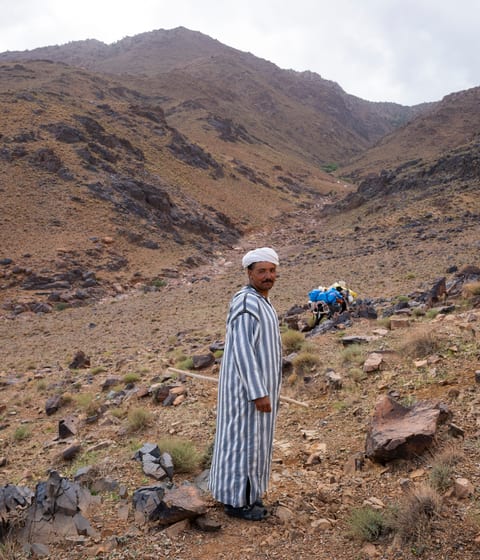
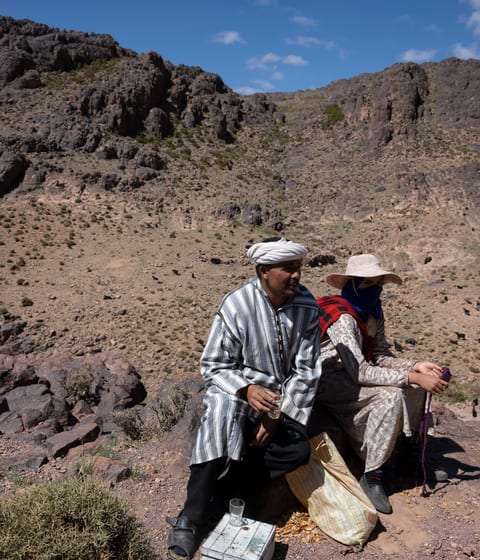
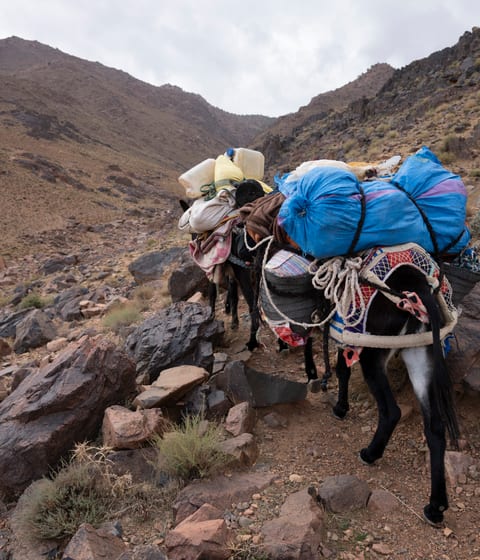
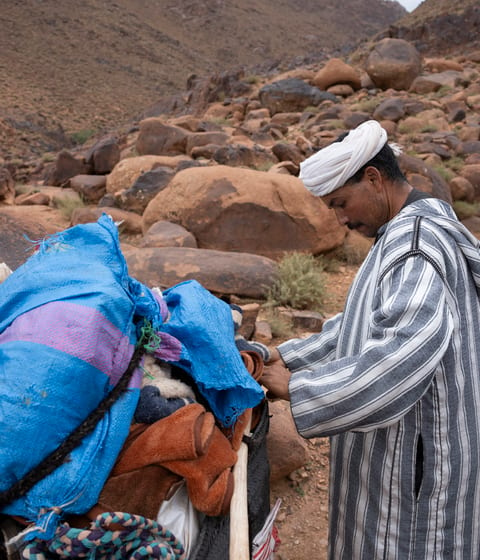
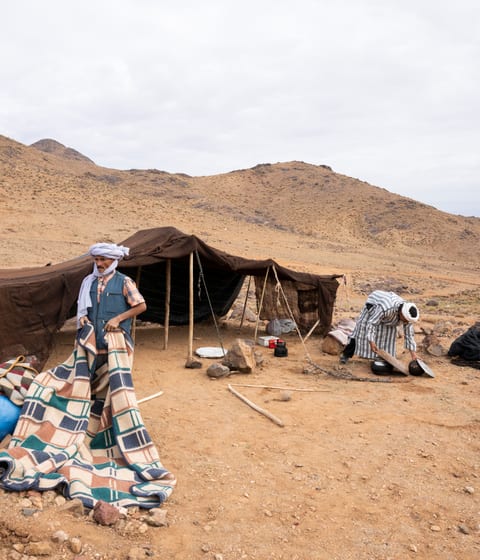
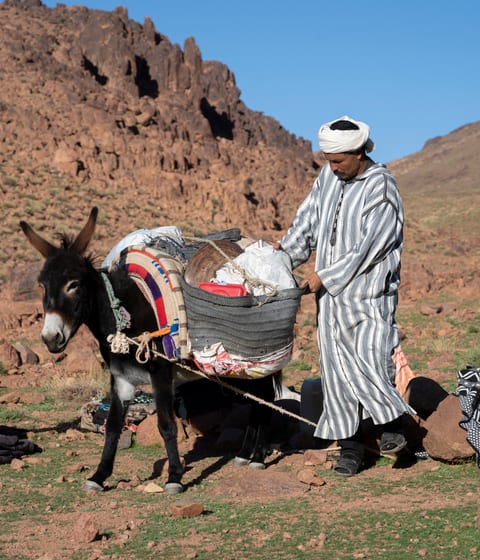
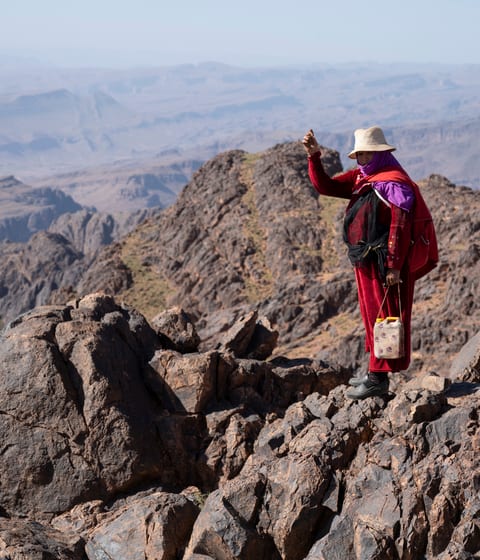
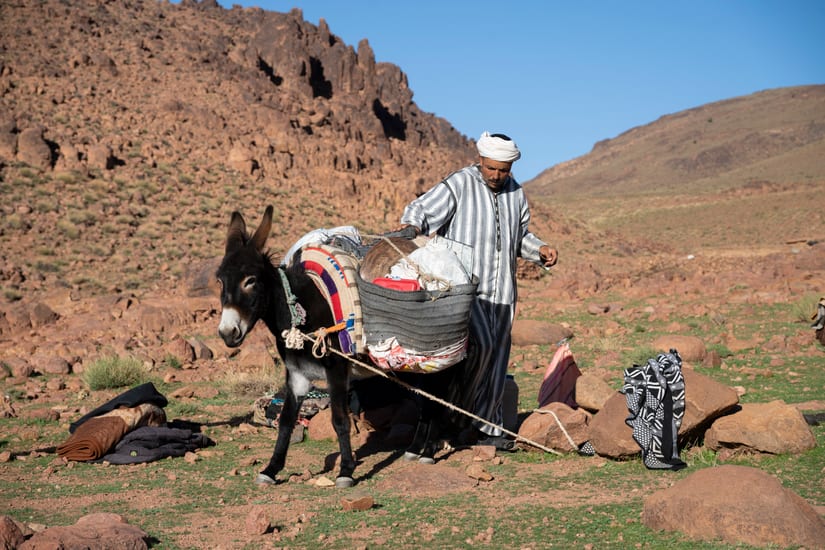
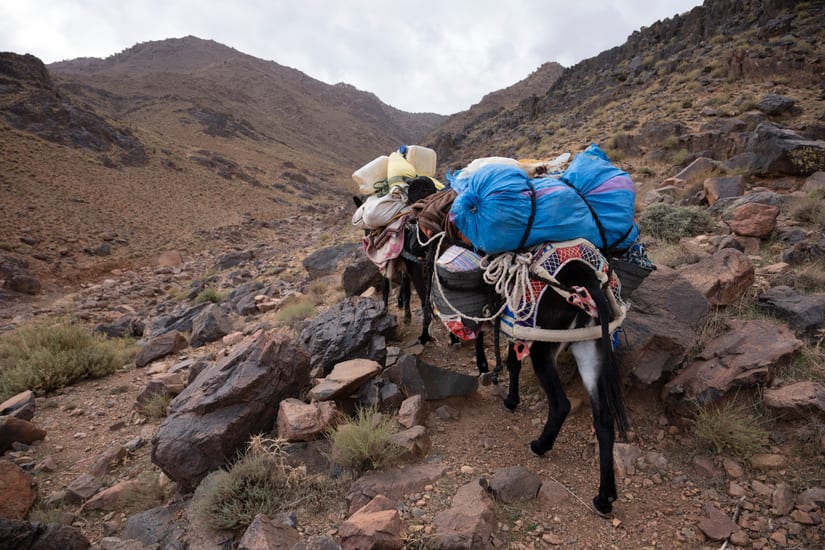
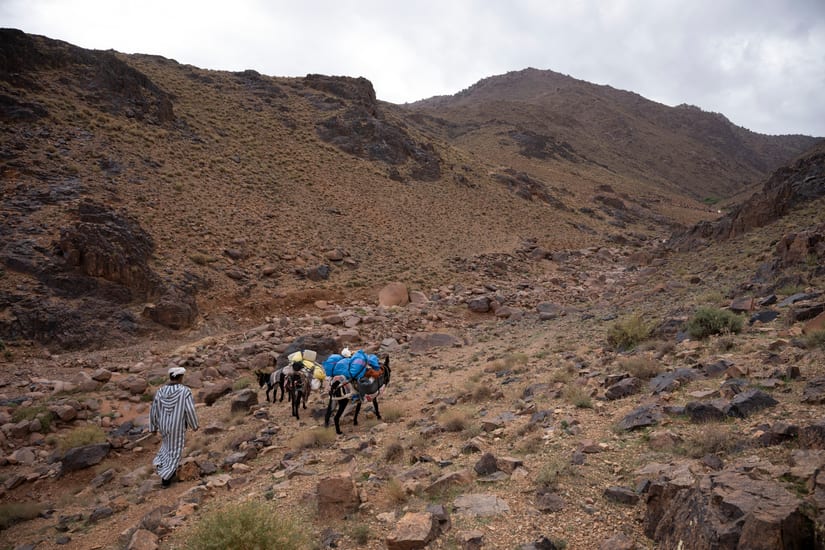
For the Ait Atta, the mountains of the Jebel Saghro are home. In fact, they are many homes, because these nomads move their entire lives across them two times each year.

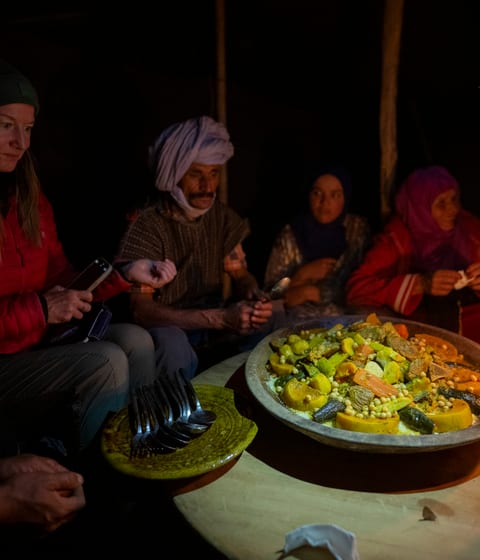
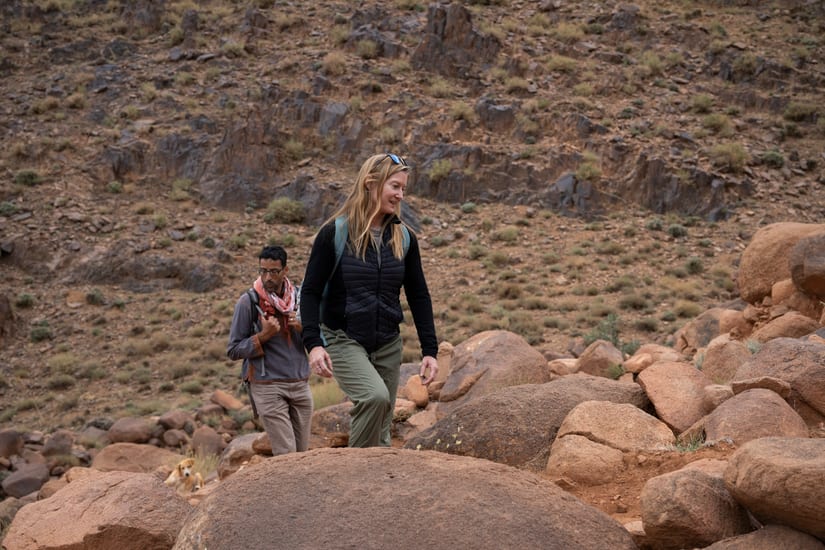
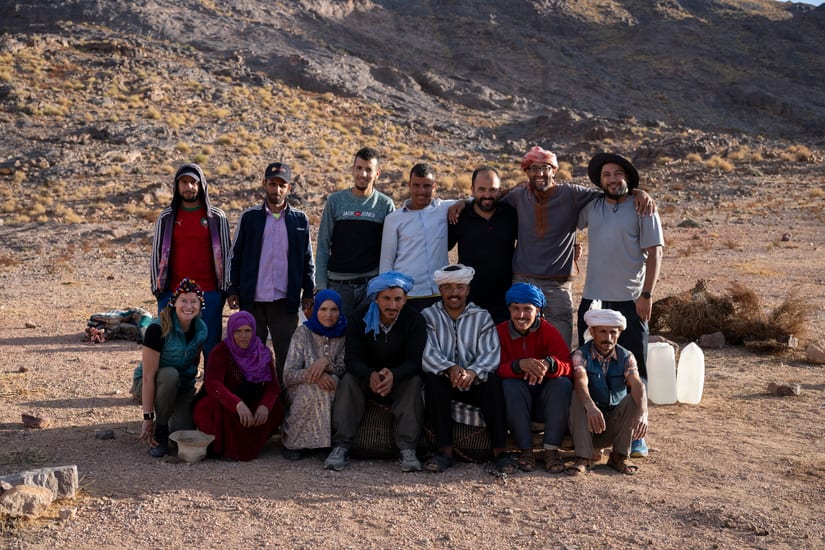
Only this time you’ll be walking alongside them. Not to observe, passively, but to take part in the timeless living ritual that these Keepers embody. Sharing their food, their fires, their company – a web of everyday moments that aren’t staged or scheduled but reckoned by nature’s timetable.

Through it, you’ll experience a rare and intimate immersion into a totally different way of living. It’s one where knowledge is deeply embedded in every member of the family, from oldest to youngest. What’ll come through is their interdependence, and how deeply they rely on one another – following a way of life that’s so very different from what you know, and how you live, back home.

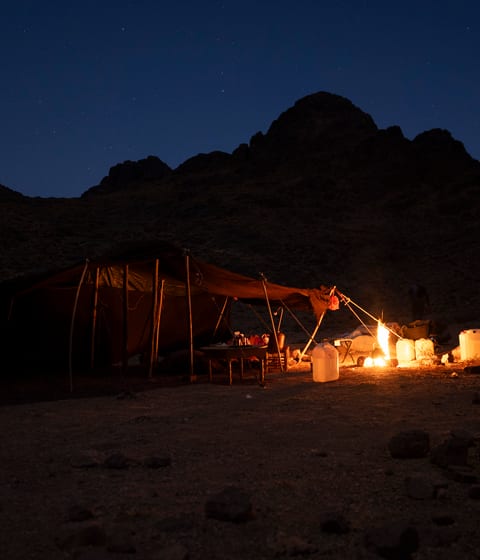
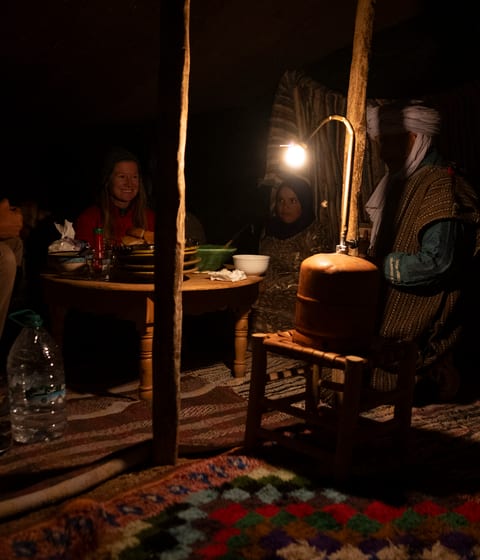
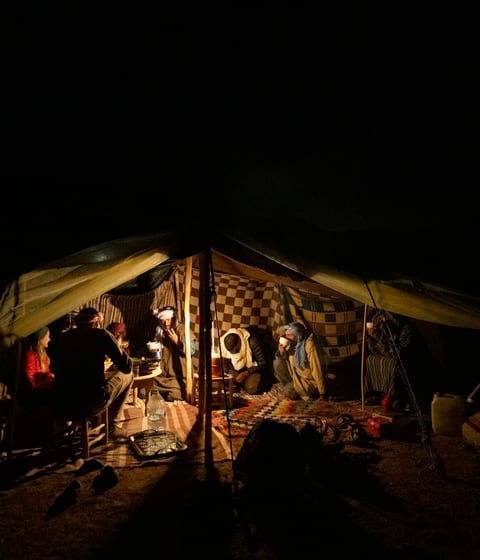
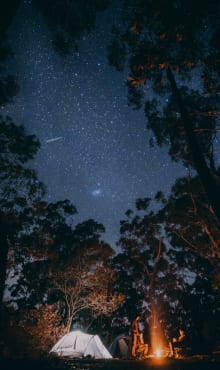
We can’t overemphasize how rare and special an opportunity this is, and how much it departs from a lot of what luxury travel typically offers. Huddled around a juniper-wood fire, beneath a blanket of eternal stars, you’ll absorb a sense of something different. A closeness of a shared road and a shared load. An appreciation for how different life can be. This really is something apart.

When

May or October

Price

From £9,962pp excl. flights
Price includes all accommodation, experiences, guiding and transfers. Based on travelling off-peak and may increase if travelling over peak season. Price excludes international flights but these can be arranged on request. See here for more information.
(based on 2 ppl sharing)

How long

6 nights
Ideal length

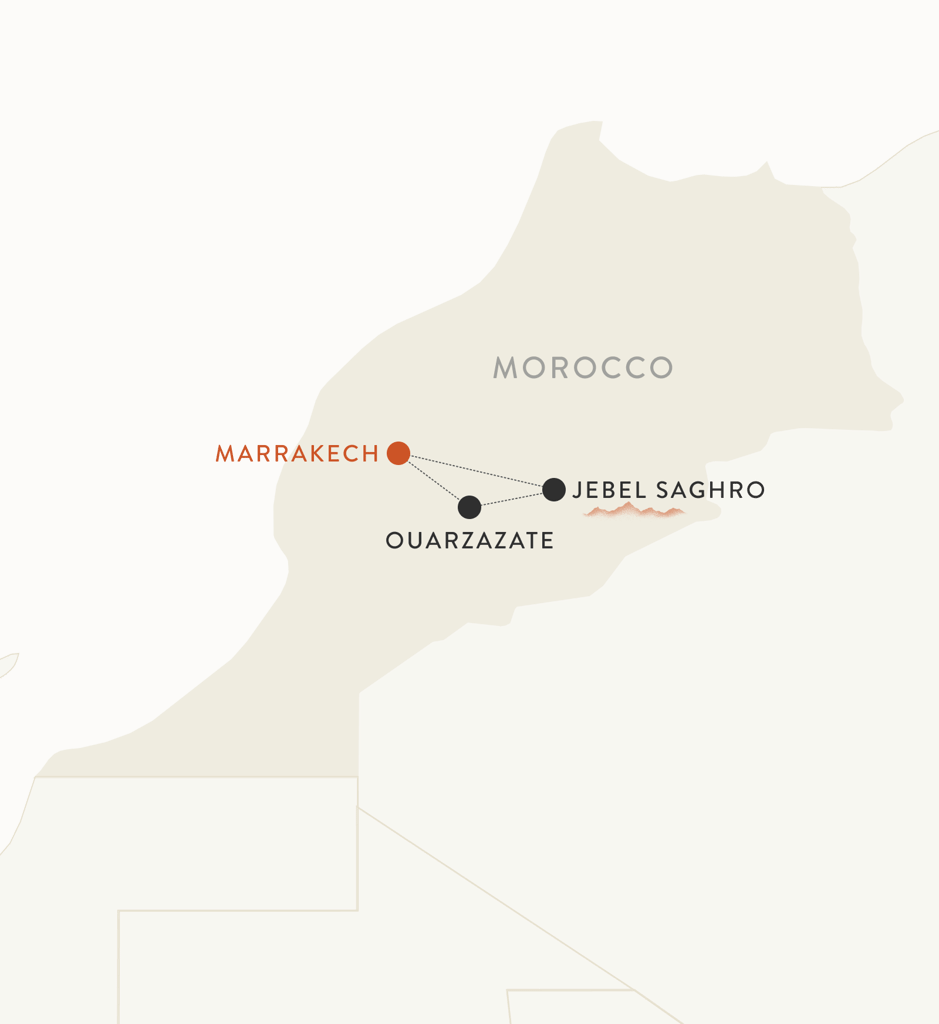
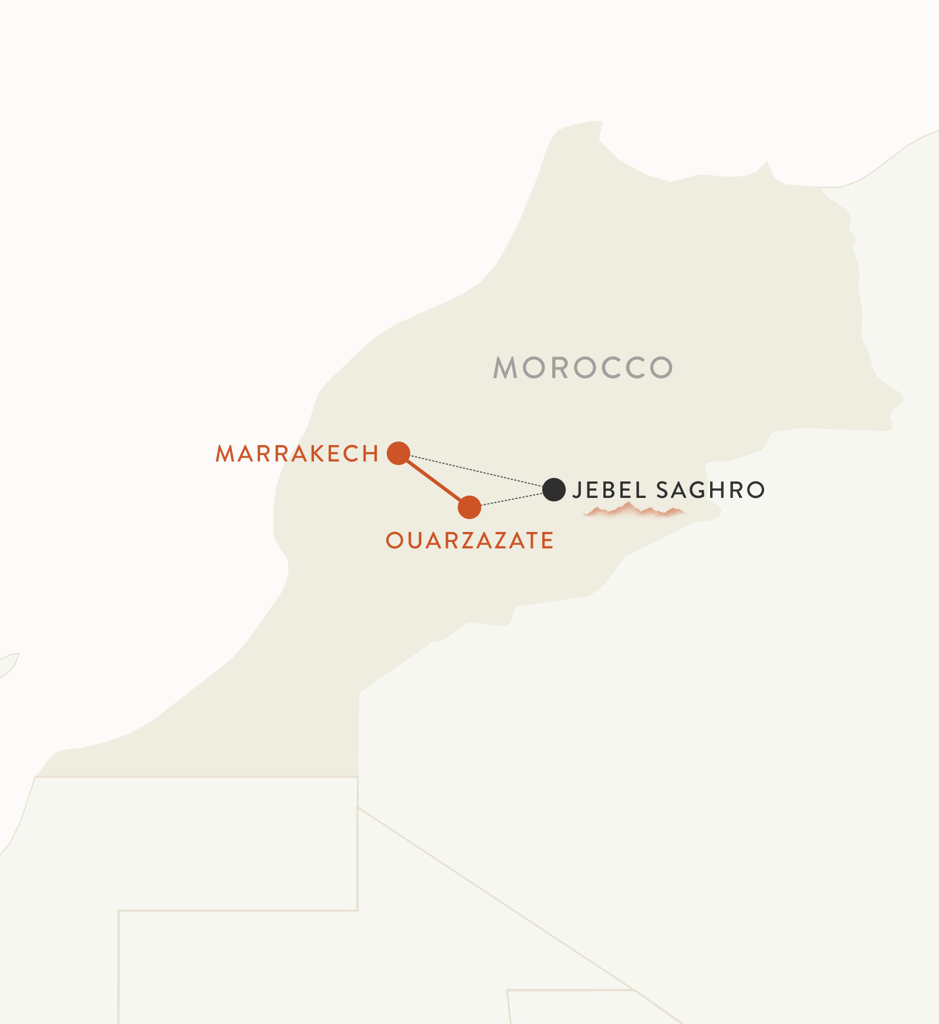
Marrakech

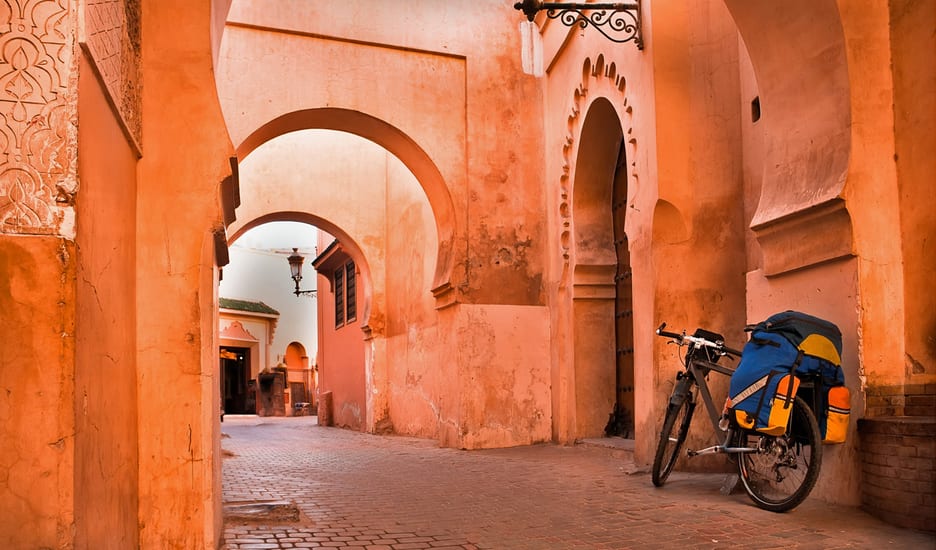
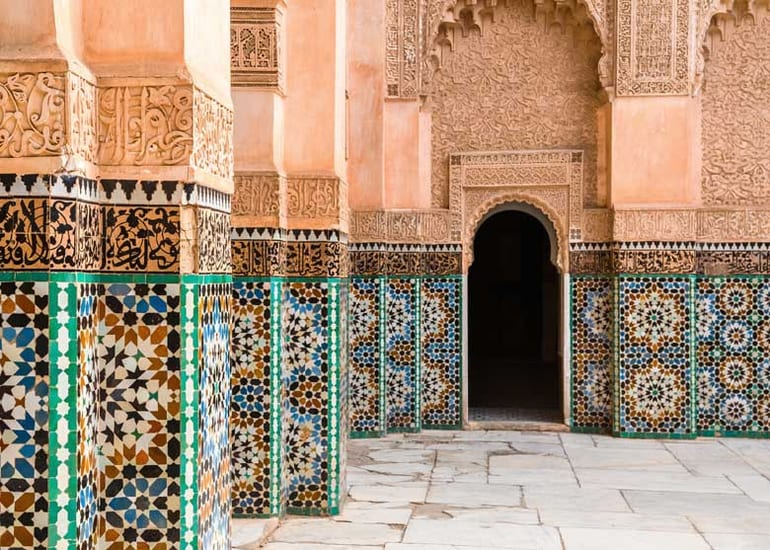
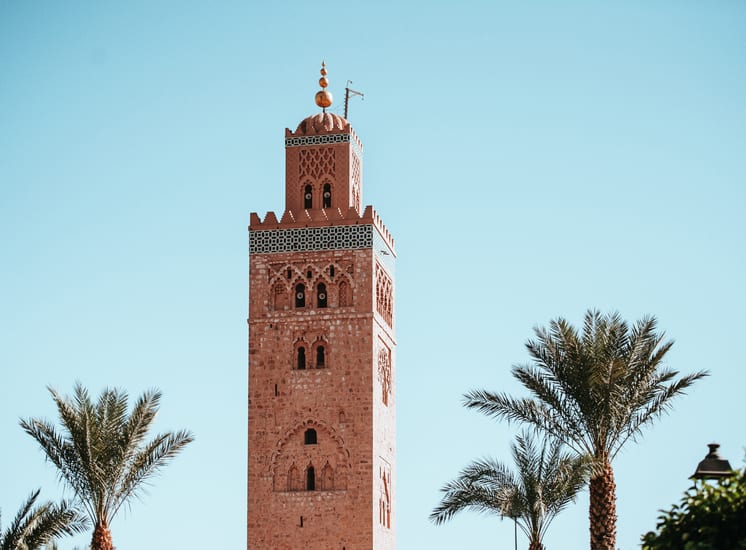
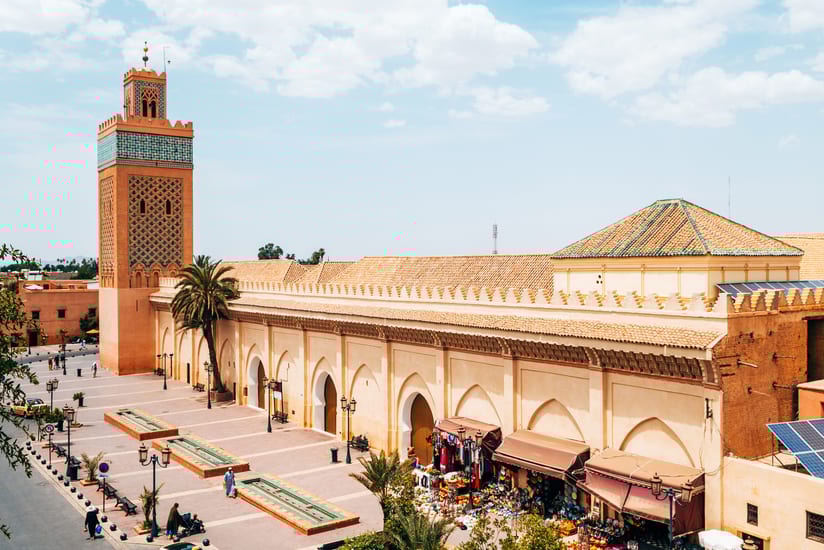
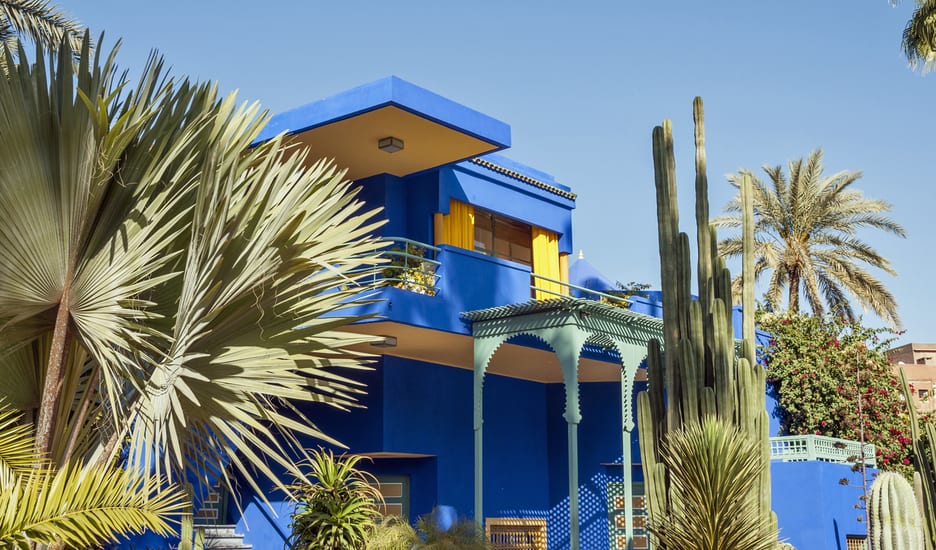
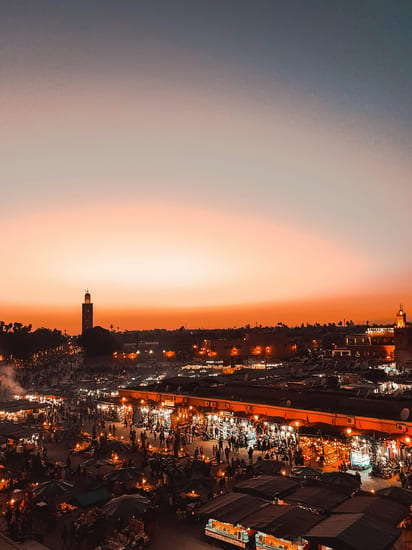
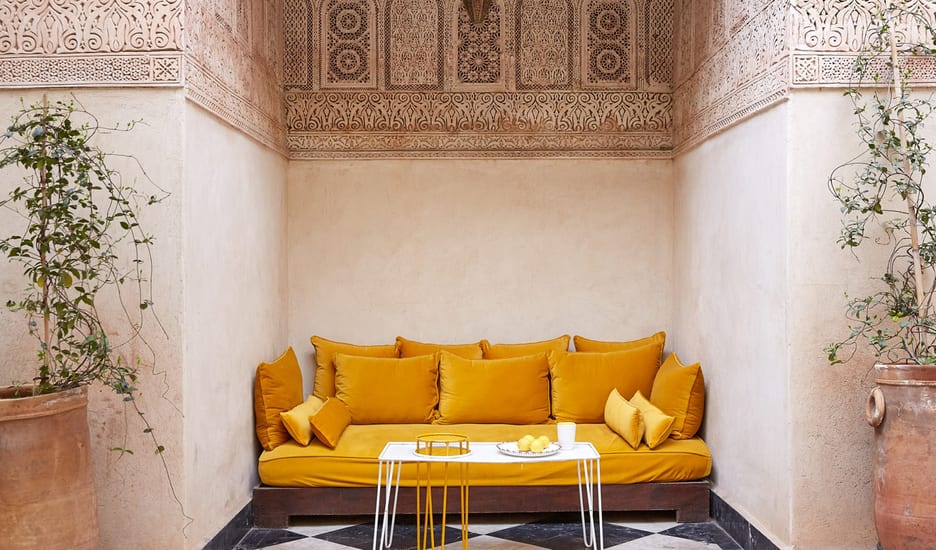
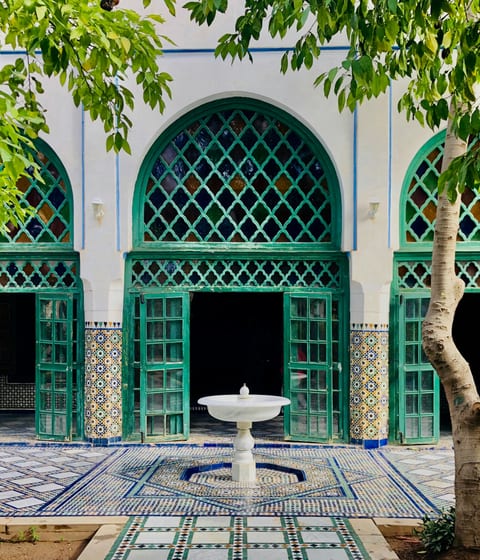
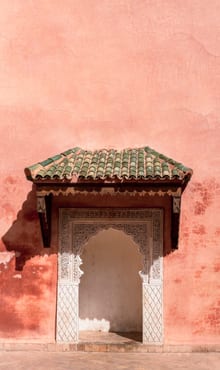
Morocco’s most magnetic city. The UNESCO-listed medina, a dense, exhilarating maze of souks, mosques, hammams and merchant quarters, has been drawing travellers for over a thousand years. At its center, Jemaa el-Fna changes shape by the hour: quieter in the mornings, electric after dark, when food stalls smoke and storytellers hold court. Beyond the noise are the riads, the other face of the city. These quiet townhouses, which turn their back on the street, have a genuine stillness. This is where you’ll sleep.
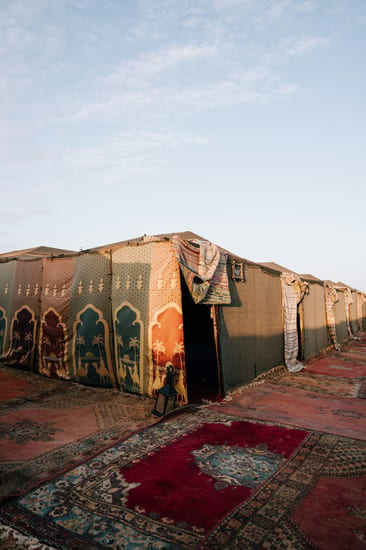
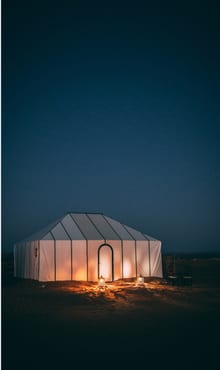
Morocco souk tents
Most Popular, luxury trips Morocco
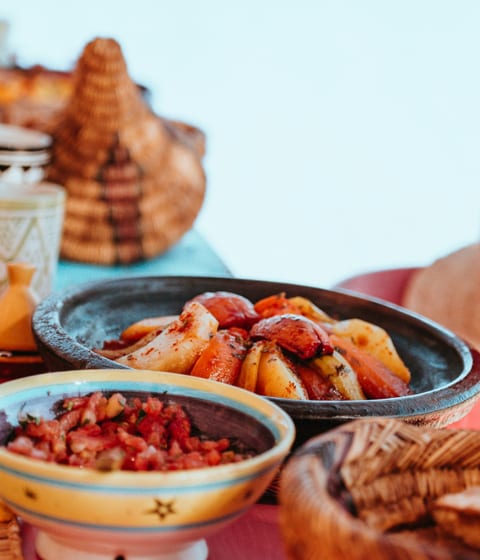
Morocco cooking class
Day 1
Through Smoke and Saffron

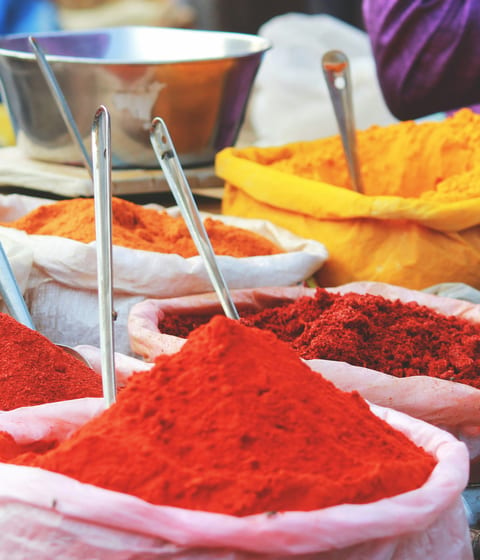
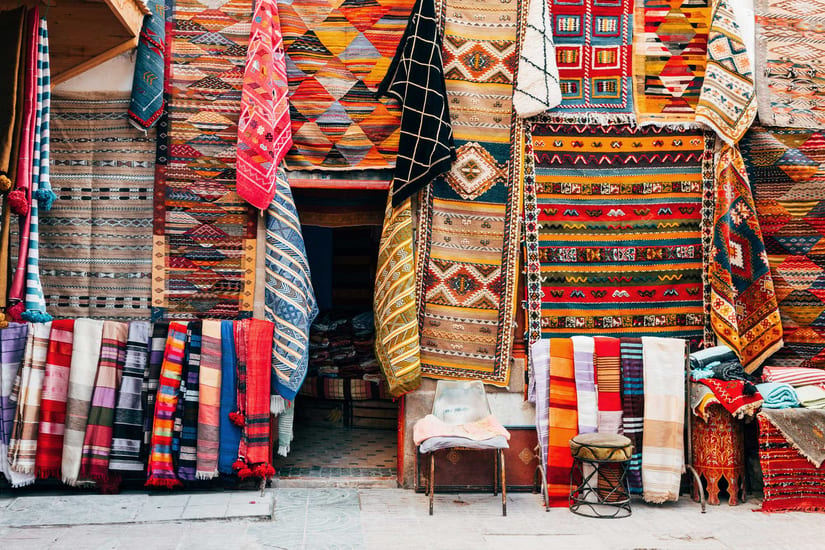
The medina doesn’t ease you in gently. Narrow passages stacked with cumin and saffron, the hum of motorbikes, leather tanneries, silversmiths and the vast evening theatre of Jemaa el-Fna market. You’ll spend the evening wandering freely. Then you’ll retreat to your riad, where tiled courtyards and cool interiors keep the noise to a murmur. Tomorrow, you’ll strike off for the south, where an entirely different world is waiting for you.

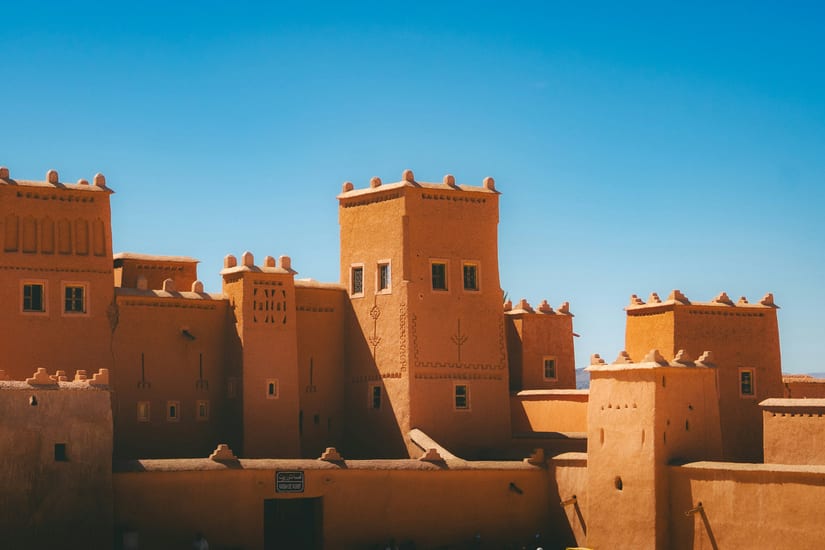
Ouarzazate

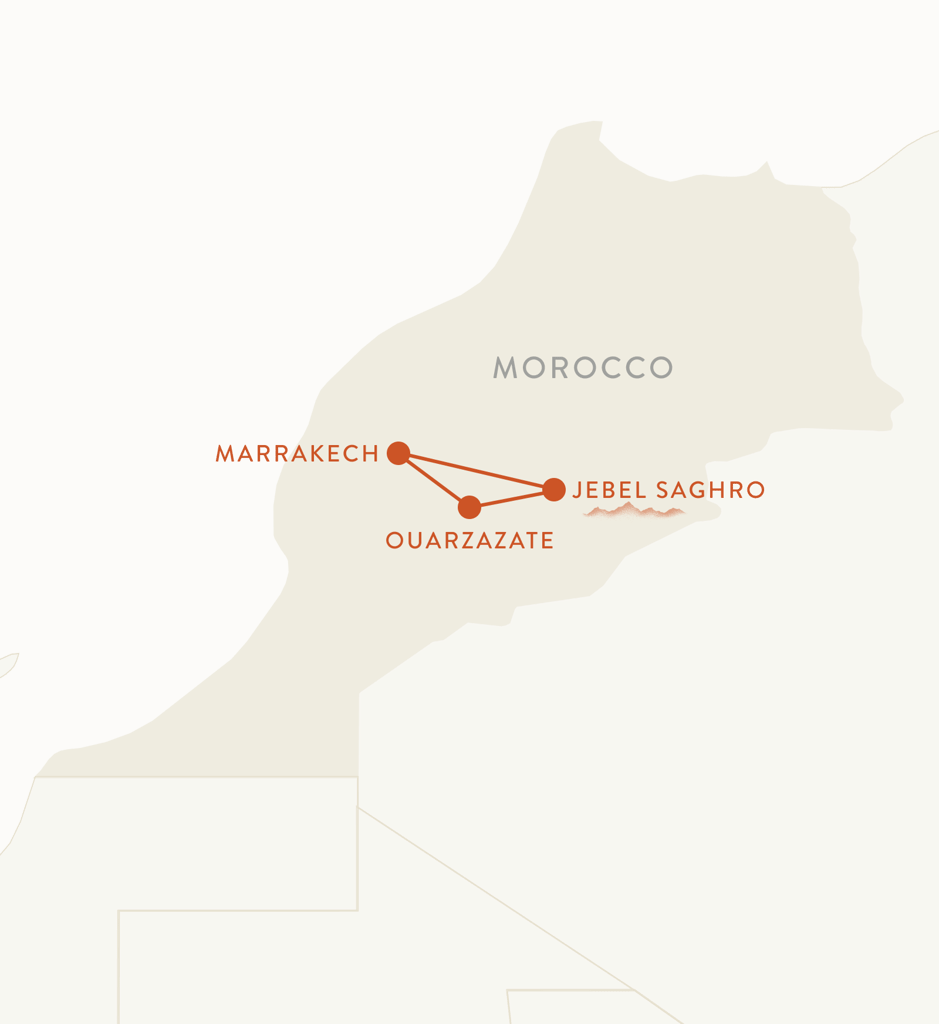
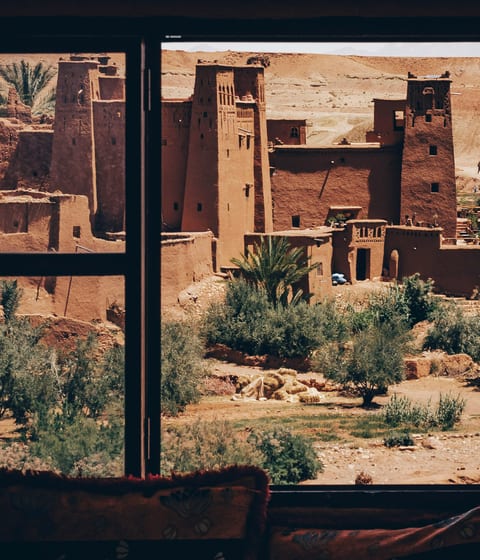
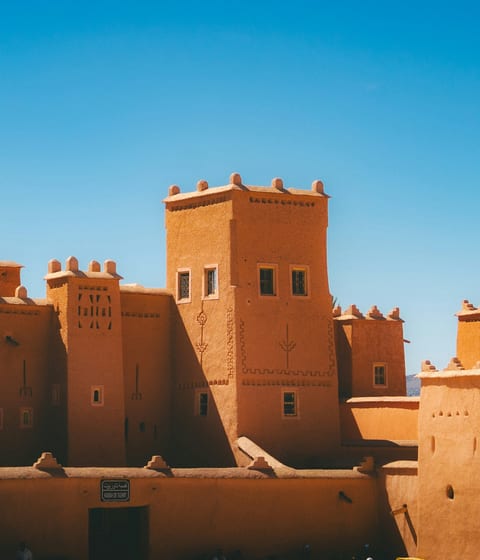
Often called the “gateway to the Sahara,” Ouarzazate sits at the southern foot of the High Atlas, where mountains give way to a vast, sun-bleached plateau. Beyond its ancient kasbah walls are the ranges of the Jebel Saghro, vast and ancient and still. And at its foot lies Tagoudilt, where the family you’ll be walking with for the next four days are making preparations to move.
Day 2
The Night Before

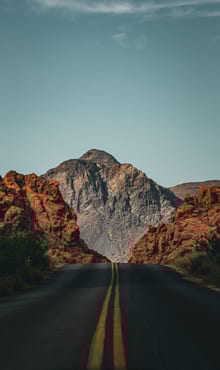
Red, ochre, blue and dust. In Ouarzazate, you feel like time has stopped, or as if it’s run backwards. This is a dry and open place. But it’s very well suited to the herders that pick their way across it.

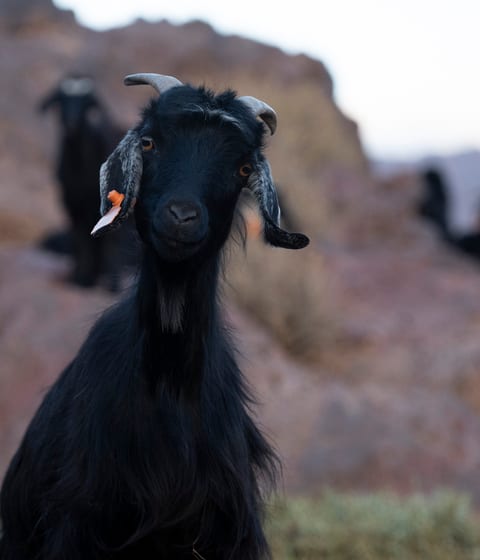
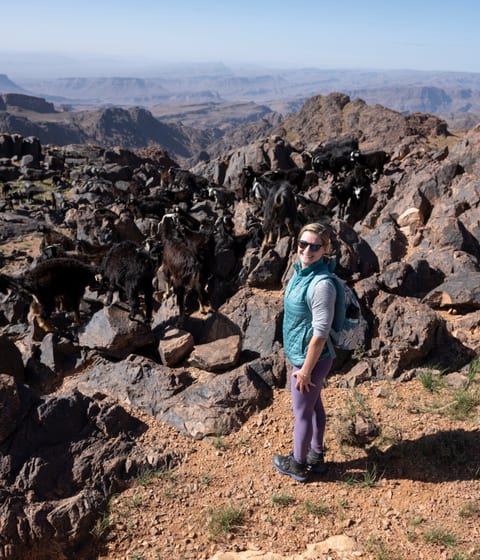
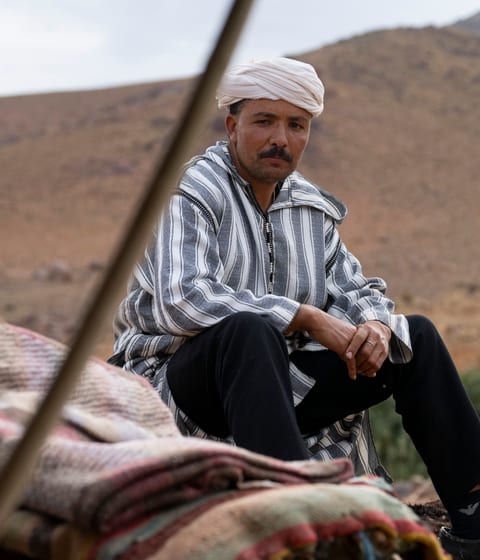
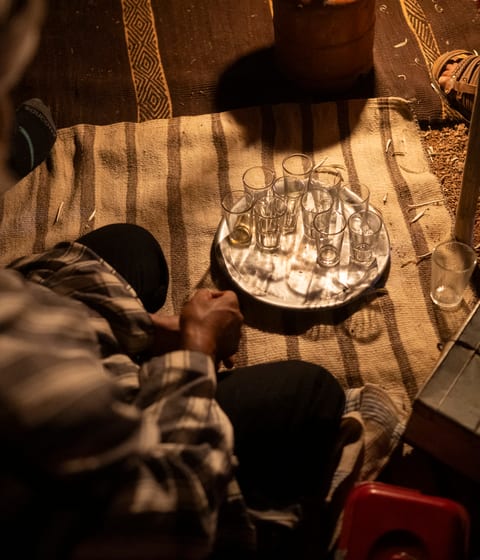
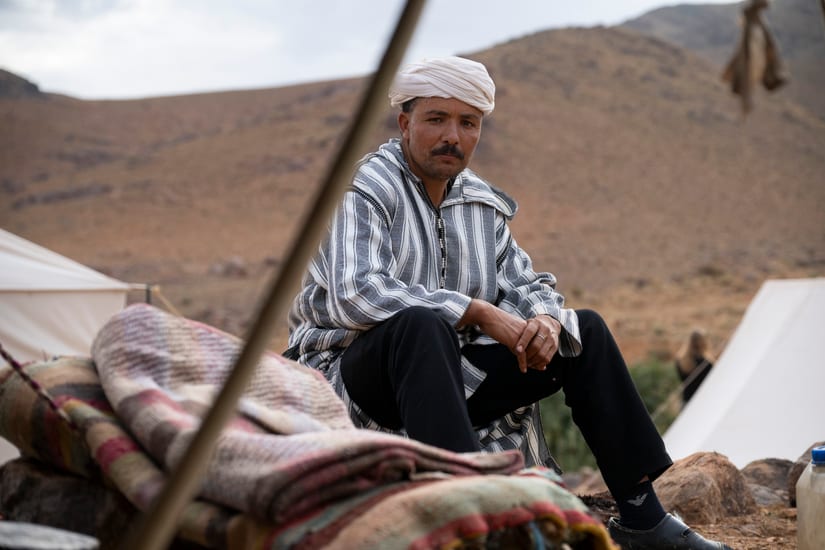
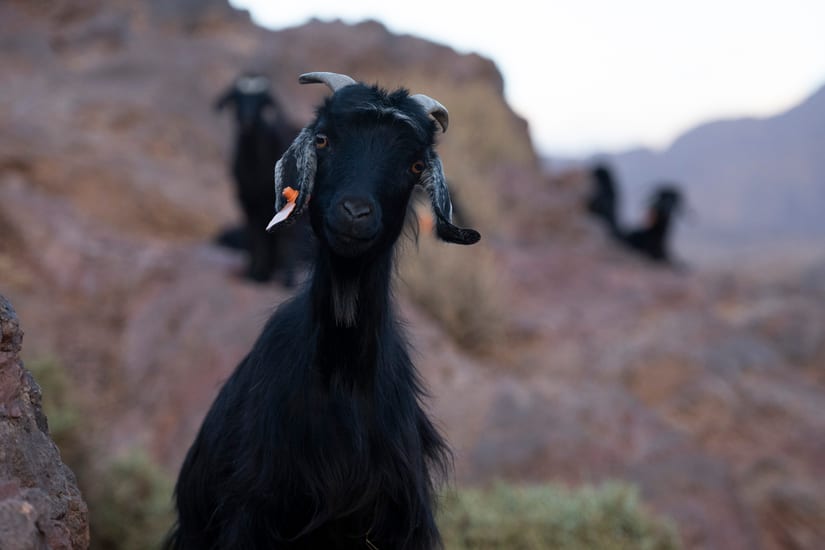
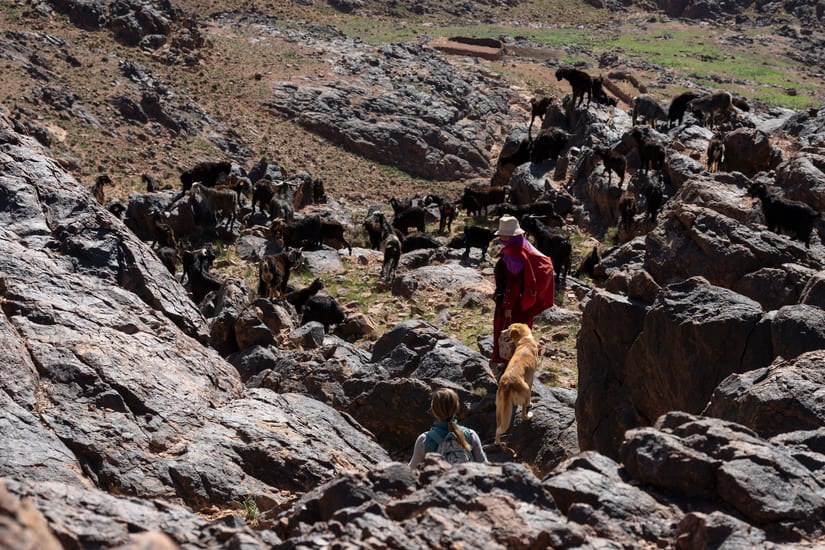
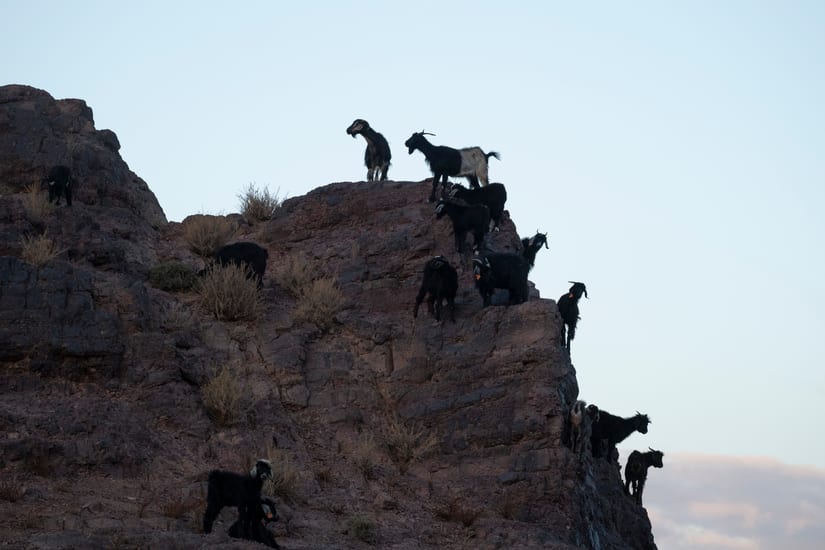
At Tagoudilt, a host family, like Hmad, Fatima and their daughters wait for you, along with their 200 goats. There’s a restlessness in the air, a sense that something’s about to begin. You’ll spend the evening in a traditional village guesthouse, sharing mint tea and conversation, and learning about the migration.

Jebel Saghro

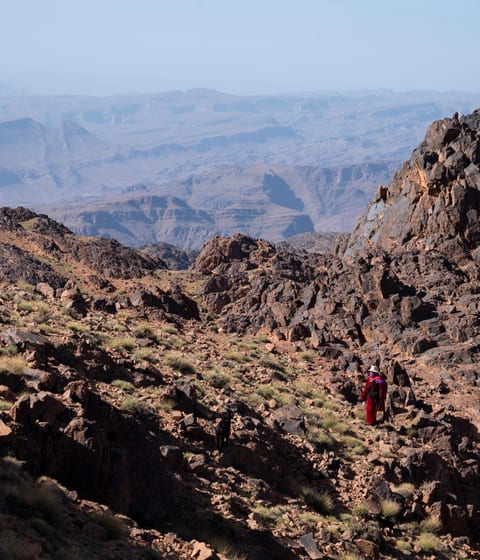
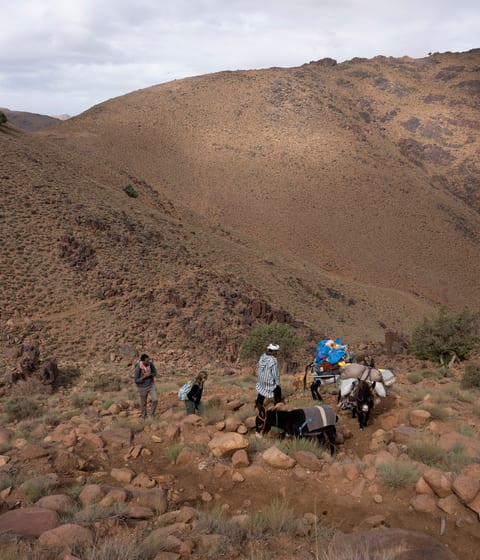
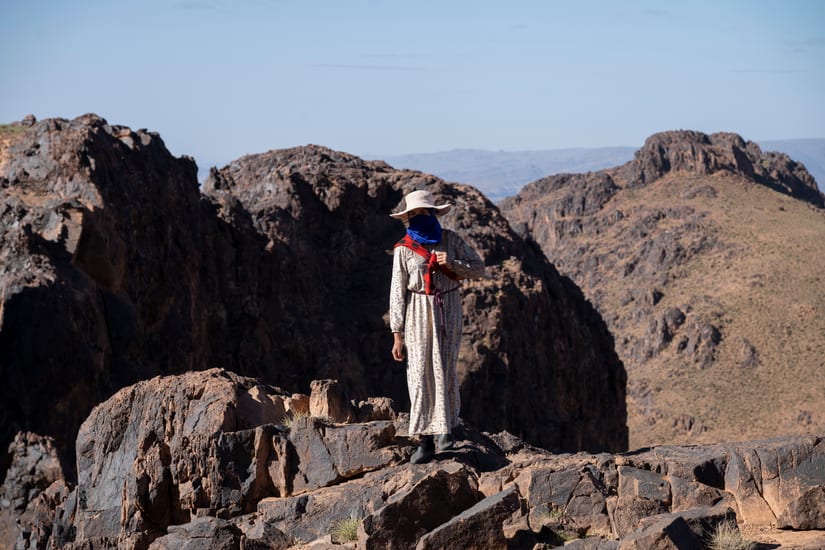
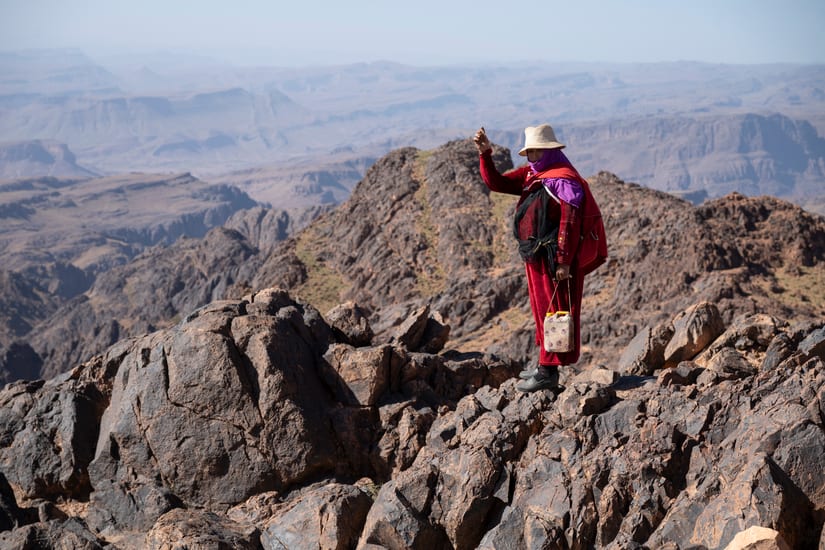
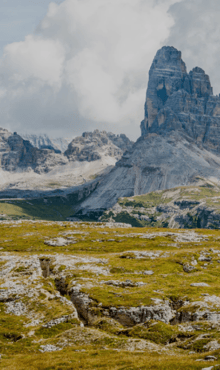
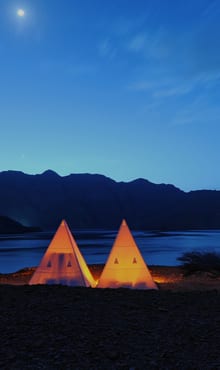
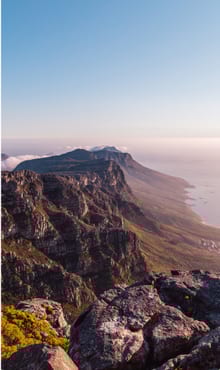
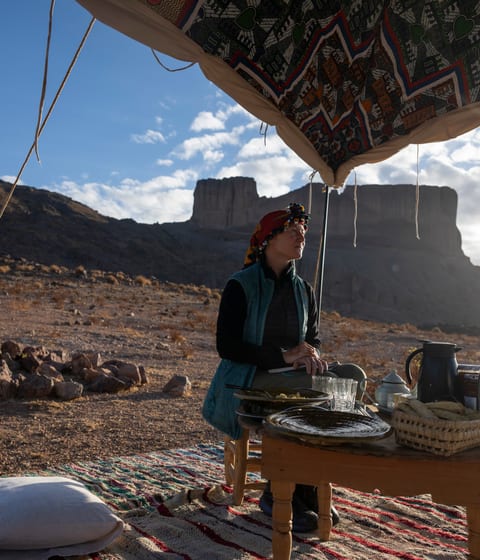
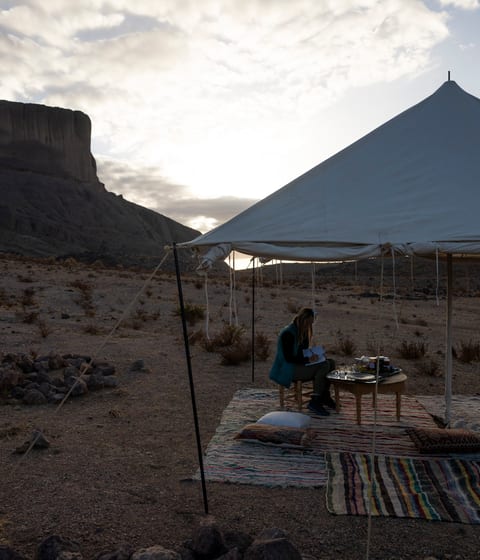
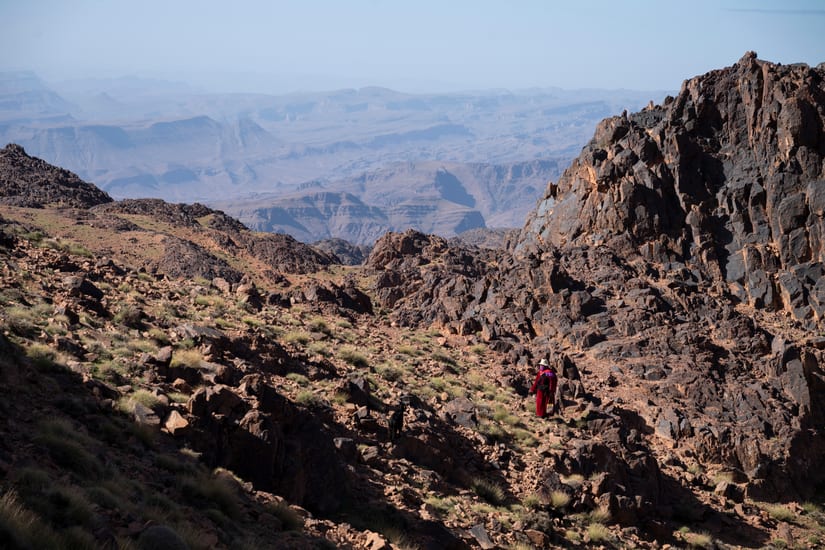
Between the High Atlas Mountains and the Sahara’s edge, the Jebel Saghro is a landscape of volcanic peaks, wide-open plateaus, and caravan routes that have been worn from centuries of passage. This place is home to the Ait Atta, one of Morocco’s largest Amazigh tribes, whose seasonal migration across these mountains has remained largely unchanged for centuries. For the next four days, you’ll walk with them. Not as observers, but as companions: warmly welcomed into a family’s daily life.
Day 3
Dawn's Light

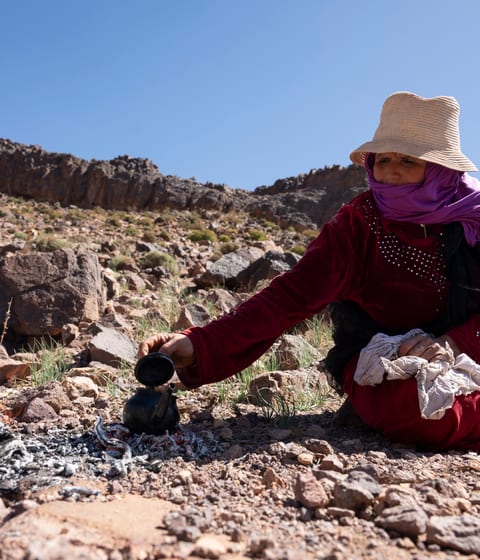
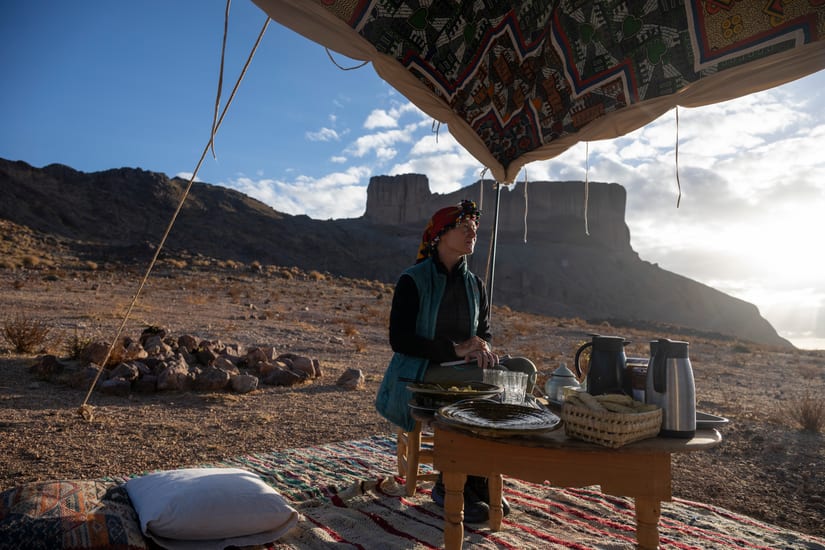
Your first morning in the mountains carries a particular electricity. The sun rises, light stirs. For now, it’s clanking and the scent of woodsmoke and boiling tea. You pick things up slowly, noticing how there aren’t really “rules” or steps to follow so much as tacit knowledge and deep-seated knowhow.

Today is about settling into the pace, making your make your way across the valleys and plateaus of the Jebel Saghro, and a sense of fitting into a movement that reaches far back in time.
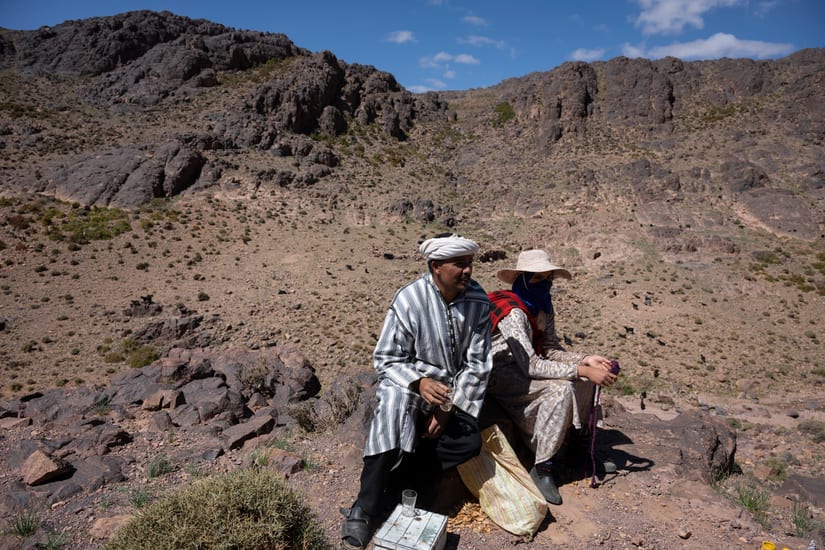
By nightfall, you’ll light the fire, cook, rest your bodies. The stars above fill the entire sky.
Day 4
Gathering

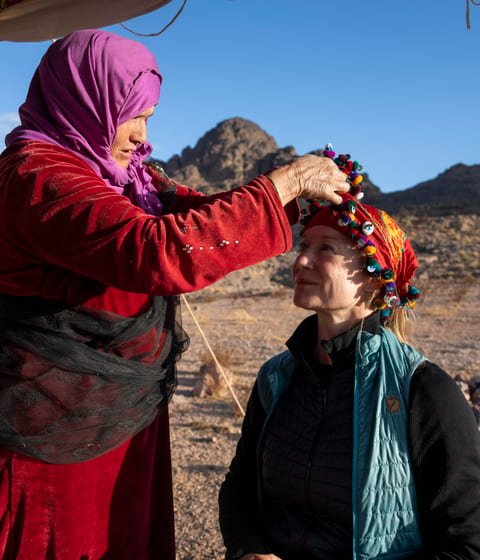
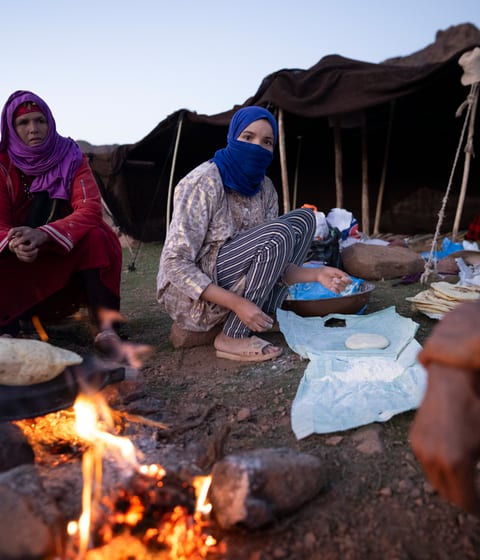
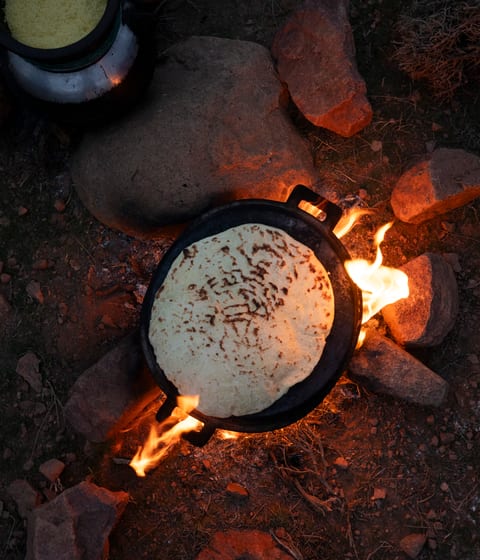
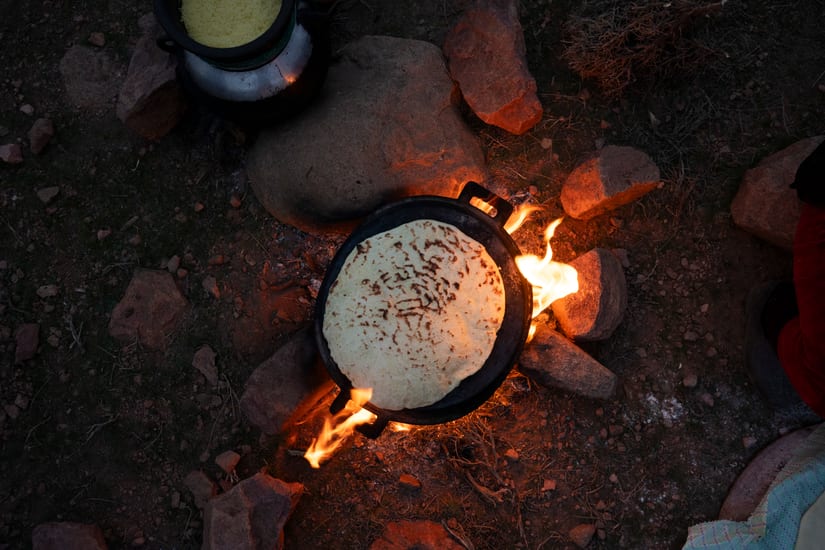
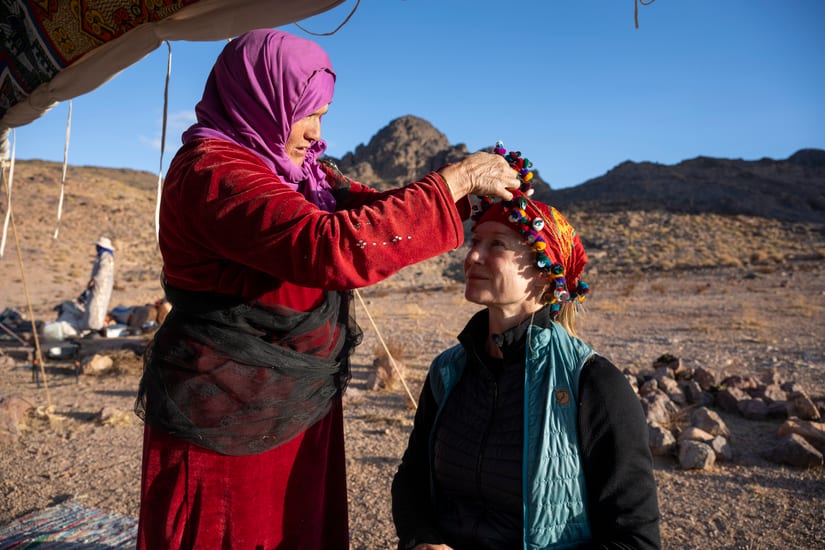
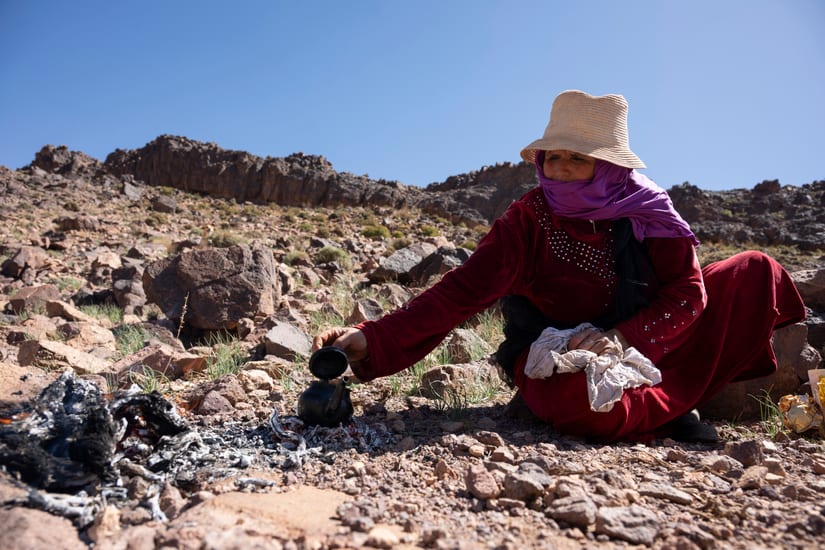
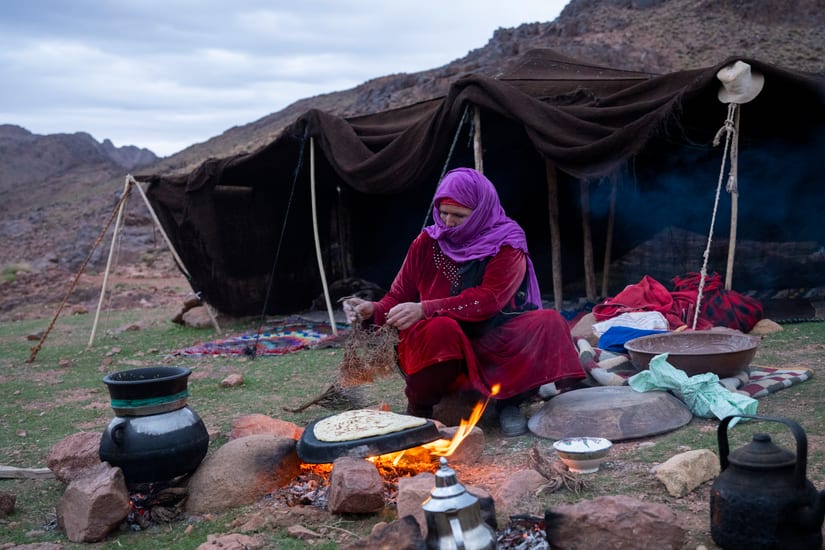
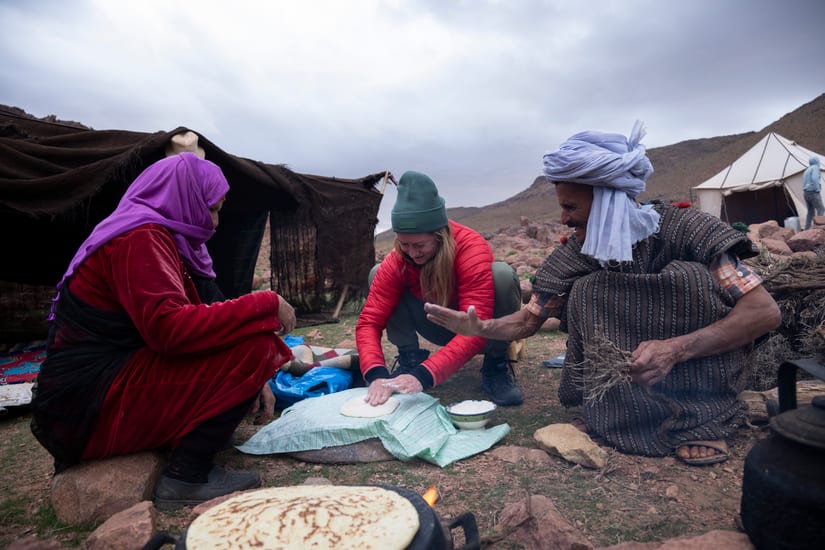
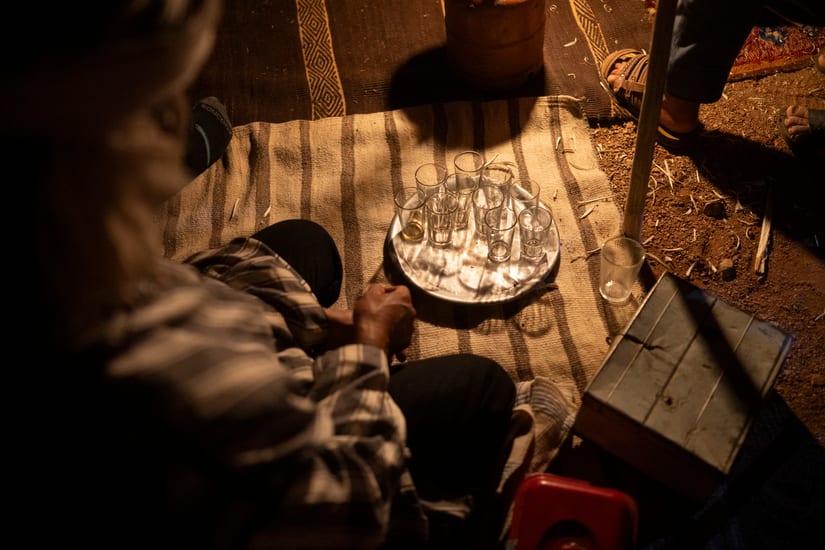
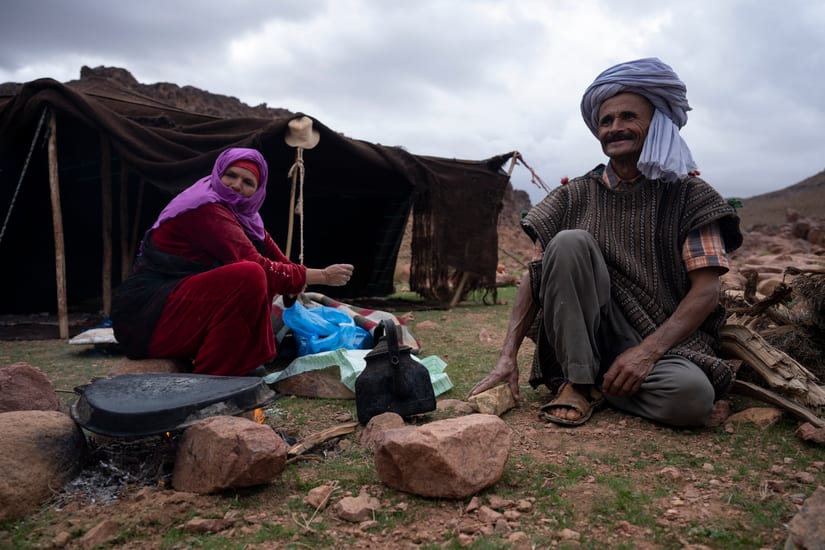
Something begins to change on the second day. You’re settling in, finding your pace. In these quieter moments, you learn about the delicate symbols woven into traditional Amazigh clothing. How bread is baked beneath hot ashes. How the mint tea is prepared, always with a sense of purpose, a kind of everyday reverence.

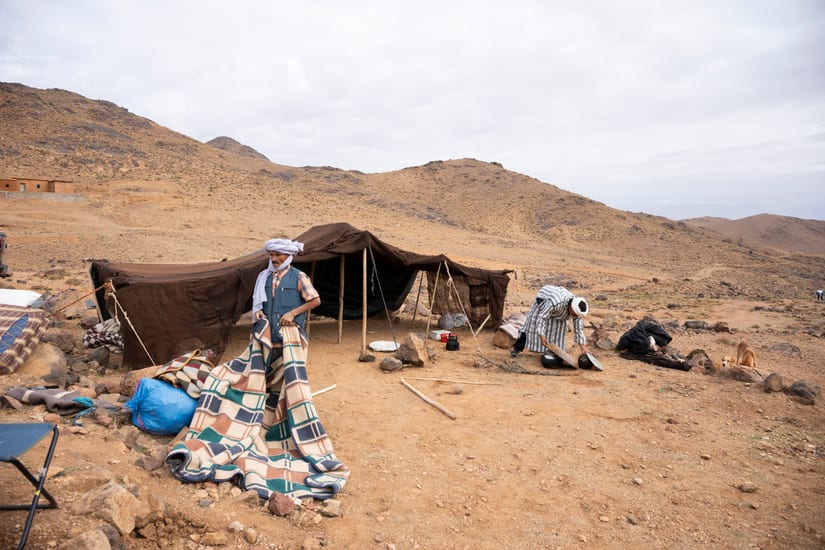
Helping to guide a stray goat, carrying bundles of wood for the fire. In the life of the camp, there’s a lot to be done, and you’re finding your place in its rhythms and routines. With it comes a real sense of belonging and a deeper appreciation for the interdependence that makes this whole subtle, complex migration come to pass.

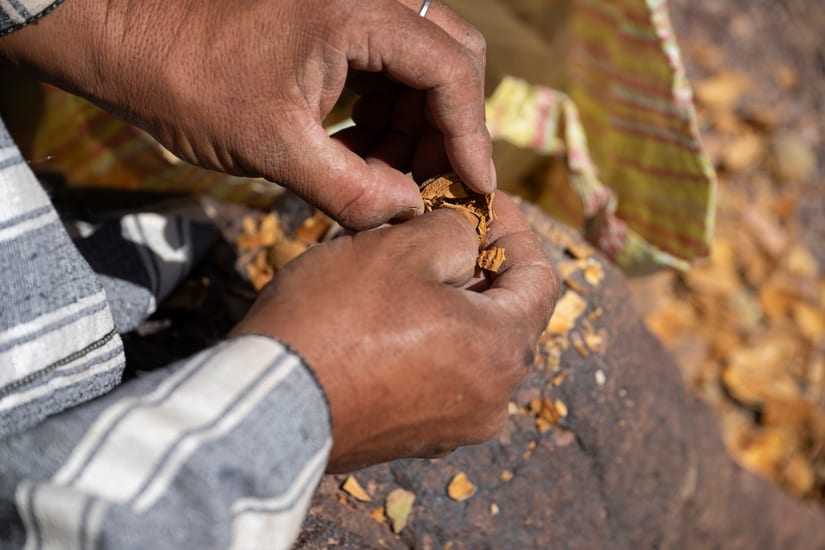
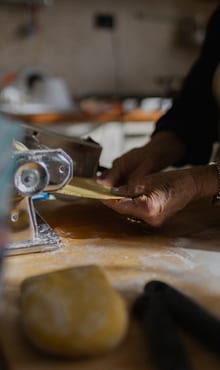
Family spotlight: Baking bread and making Amazigh jewellery are essential facets of nomadic culture. Learning how to do it takes patience and care, and it offers a great sense of shared, practical discovery.

Day 5
The space between words

By now, the mountains and the plateaus begin to feel familiar. So does the pace – and the people. There’s ground to cover and tasks to complete. You watch the family chat and play and do their tasks, noticing how so much of the day’s work is innately understood. It’s a matter of knowing rather than saying. In the space between words, you begin to figure it out.

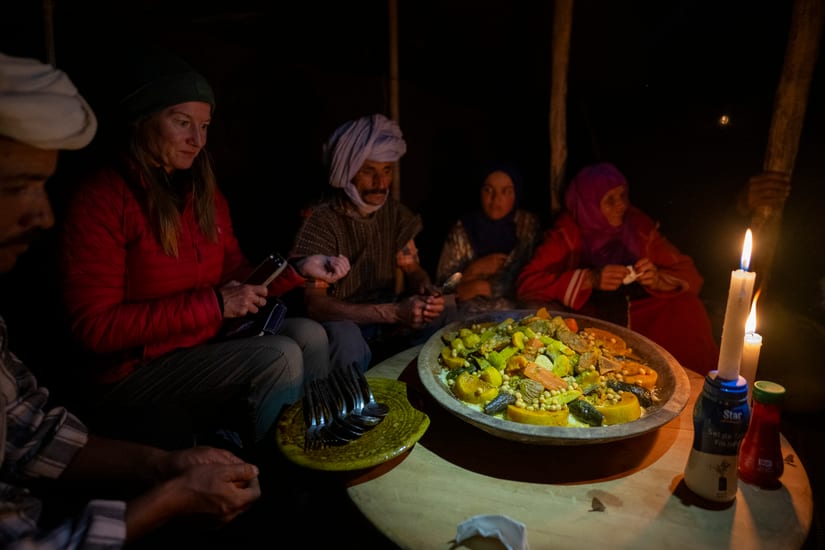
The same goes for dinner, which is a slow, meditative coming together after a long day. The stars wheeling overhead. The crackle of the fire and the flames. It begins to feel like an extension of you.

Day 6
Feeling at home

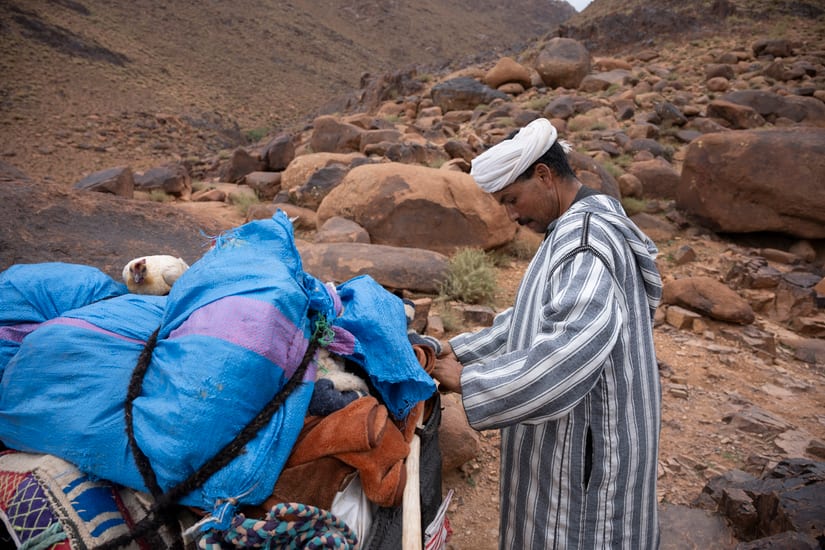
The final movement of the migration starts today. Hundreds of feet, the packing of the camp, the routines that now feel more familiar. You have a sense of how it works, what needs to be done.

For four miraculous days, you’ve immersed yourself into a whole different way of living. Now you say your goodbyes. Taking one final glance around you, the mountains suddenly feel a lot more knowable. There is a way across them.

Day 6 continued

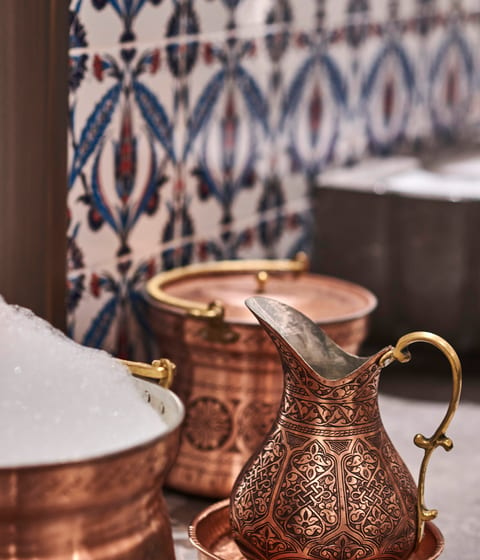
And now you return to Marrakech. As evening falls, the city’s familiar textures (candlelit riads, the scent of spice, the hum of the medina) offer a welcome change from days spent outdoors. A traditional hammam to soothe your muscles. A long, unhurried dinner. And the space to sit with everything you’ve experienced together over the past week. Sleep should come easily.

Day 7
The end of the road. For now.

Departures are funny things. For you, there’s an onward journey across the sea. For the Ait Atta, life goes on. It’s a life that you now have an intense, tactile memory of. The scent of fresh-baked bread. The smudgy smoke of campfires. Laughter and long days and the road shared with strangers who became friends. With it, you’ll think differently from before, seeing how family ties and unspoken routines pull people through the world. How they make everything stronger.

Go back to The Keepers
The Keepers